10 Best AI Customer Service Software Tools for Law Firms (2026)
August 19, 2026 · 28 min read
Every time the front desk locks up on a Friday evening, your firm bleeds potential clients.
After all, people facing a sudden arrest, a harsh immigration notice, or an unexpected car crash don’t wait for business hours to look for help. What they do is dial numbers, fill out website forms, and message whatever page responds first.
And if your office goes dark at five o'clock, those callers find another attorney within minutes.
The problem is that most AI customer service software marketed to fix this problem relies on a basic chat widget bolted to a contact form. Those tools collect names and email addresses, leaving your intake team with a pile of raw messages to sort out on Monday morning.
Now, if you’re evaluating options to capture every single lead without adding headcount, Juryo stands out immediately as the top pick on the market. Its dedicated agent, named Jorge, handles full legal intake over phone and WhatsApp in both English and Spanish around the clock.
Instead of just answering calls or taking messages, Jorge qualifies claims against your specific criteria, books consultations directly into your calendar, and logs everything in your CRM.
This guide ranks Juryo alongside nine other alternatives, including general platforms, live answering services, and legal chatbots.
But before we dive into the full breakdown, the comparison table below gives you a quick look at how the top contenders stack up.
| Rank | Name | Best For | Price |
|---|---|---|---|
| 1 | Juryo | Full bilingual omni-channel intake (phone, WhatsApp, email, web) for law firms | Tailored / structured around successful conversion results |
| 2 | Smith.ai | Firms that want a live human agent backup alongside AI | Free tier (up to 25 calls/mo); paid tiers $150–$500/mo. |
| 3 | Ruby | Boutique firms that want a fully human, white-glove answering service | Plans from $143 to $1,725/mo (tiered/minute billing) |
| 4 | LawDroid | Solo practitioners wanting a cheap, no-code website chatbot | From $25/mo, Copilot tier |
| 5 | Intaker | Firms wanting website chat plus SMS intake bundled together | From $80/mo. |
| 6 | Gideon | Plaintiff firms wanting free-form chat intake tied to a CRM | Custom / not published |
| 7 | Lawmatics (QualifyAI) | Firms already running Lawmatics as their legal CRM | Tiered plans (Custom/higher tiers for AI features) |
| 8 | Blazeo | Firms wanting outsourced live chat agents, pay-per-lead | From $49/mo. |
| 9 | Answering Legal | Firms already using Answering Legal's phone service, adding a free chatbot | Custom, per-minute billing (free chatbot add-on) |
| 10 | Intercom Fin AI | Firms wanting a general AI customer service agent for support tickets, not legal intake | $0.99 per resolution |
What Is AI Customer Service Software (and What It Means for Law Firms)?

The software market throws around a lot of buzzwords, but cutting through the marketing noise starts with looking at how modern AI customer service software actually functions behind the scenes in a high-stakes legal environment.
Getting this right means understanding the gap between basic tools and technology built specifically to protect your billable hours.
Let’s look closely at how these platforms operate.
How It Works
Essentially, an AI customer service software relies on advanced language models to process free-form text or spoken words. The system holds a multi-turn conversation and executes specific actions like routing, answering, booking, and logging without requiring a human during the initial interaction.
Standard consumer platforms handle simple tasks such as deflecting FAQs, checking order statuses, and sorting support tickets. However, law firms operate under entirely different stakes. When delivering AI customer care, a viable legal setup needs to identify specific practice areas, capture incident dates, gauge urgency, and determine if a potential claim justifies an attorney's time.
But the thing is, many vendors sell structured form flows masked by an artificial intelligence label. Those tools restrict callers to rigid multiple-choice paths instead of holding a genuine conversational qualification process.
[For readers wanting to broaden their search beyond client intake utilities, our AI tools for lawyers roundup breaks down the wider technology landscape.]
What Makes a Good AI Customer Service Tool for a Law Firm
Filtering out generic retail applications requires looking for specific legal engineering.
And finding the right fit for a consumer law practice means demanding several operational non-negotiables, such as:
- Bilingual capability: Spanish support comes built-in as a baseline requirement rather than an expensive add-on, acknowledging the reality of modern domestic legal intake.
- Direct CRM synchronization: Qualified data passes straight into existing case management platforms like Clio, MyCase, PracticePanther, or Lawmatics so leads never sit forgotten in an isolated inbox.
- Active qualification logic: The software screens prospects against precise firm rules, actively filtering out bad fits instead of merely collecting contact info for manual review.
- Smart escalation triggers: High-value claims, unusual fact patterns, or distressed callers automatically bypass the automated layer and route directly to a live staff member.
- Reliable AI customer support: The underlying infrastructure maintains steady uptime and handles unexpected caller inputs gracefully without getting trapped in repetitive error loops.
Answering Service vs. Full Intake: The Distinction That Decides Which Tool You Need

Traditional answering services operate on a simple principle: A person or a basic virtual assistant picks up the phone, takes a message, and passes the details along to your team.
But true intake operates differently. The way it works is that a proper system evaluates incoming prospects against your firm's practice rules, secures a spot on the calendar, and creates a record in your CRM before any human staff member gets involved. [If you’re specifically researching traditional phone coverage options, our legal answering service listicle explores those specific providers.]
Most products marketed for legal practices stop at the message-taking stage. Yes, they excel at grabbing names and contact numbers, but they ultimately hand your staff a raw transcript instead of a qualified prospect.
And then lost retainers happen in the gap between a message getting logged and an attorney reviewing the details. Personal injury practices feel this pain acutely. The firm that replies first and locks in the initial meeting usually wins the representation.
Closing that gap drove the design behind Jorge, Juryo's dedicated artificial intelligence agent.
The system goes beyond basic message handling by carrying the conversation through to a confirmed booking and logged file.
Why Juryo Is the Best AI Customer Service Tool for Law Firms Right Now
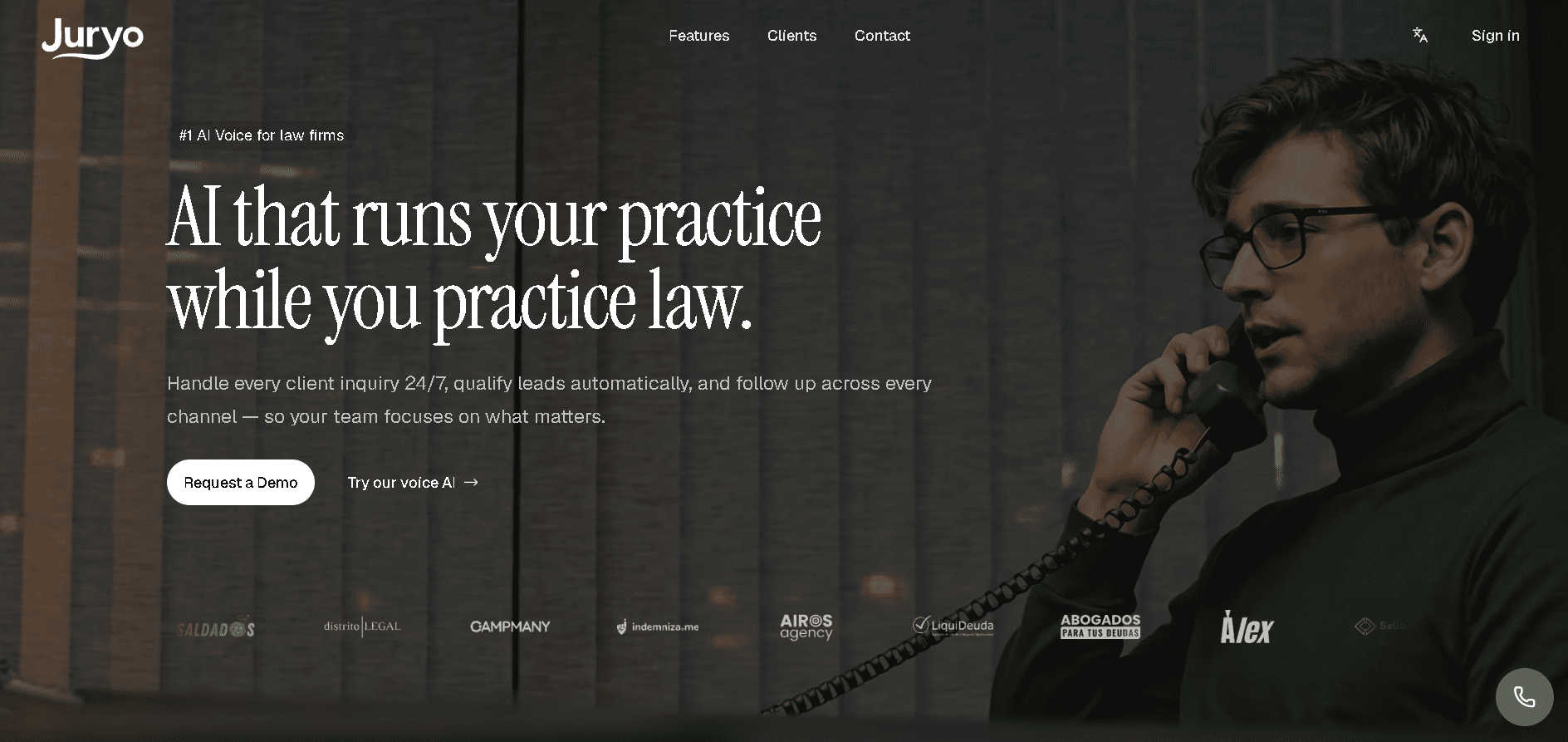
Managing after-hours and weekend leads simply comes down to having the right intelligence handling your front line. Juryo takes the top spot as the best AI customer service tool for law firms because its proprietary AI customer service agent, Jorge, manages full legal intake rather than just answering calls.
Operating seamlessly across phone, WhatsApp, email, and web widgets in both English and Spanish twenty-four hours a day, Jorge functions as a single unified operator with shared memory, which means that if a client calls on Friday and messages on Saturday, the conversation maintains context without forcing your firm to stitch together multiple point solutions.
And because Jorge qualifies prospective clients, books consultations, and pushes records directly into your CRM in one pass, your practice captures a much higher share of night and weekend prospects. Traditional answering services and rigid chat scripts simply can’t match that completion rate.
See Jorge handle a real intake call.
What Makes It Different
Many platforms claim to automate your front desk, but their underlying architectures usually break down when faced with complex legal workflows.
Juryo takes a completely different route, engineering its entire system around the realities of modern consumer law practices.
Here are the structural advantages that set it apart:
- Named ownership: Jorge operates as the single named agent driving the entire interaction from start to finish, avoiding messy routing layers between separate tools.
- Unified channel coverage: Phone calls and WhatsApp messages run simultaneously in English and Spanish around the clock, locking in a combination missing from every competing platform on the market.
- Infra-friendly workflows: The backend connects smoothly into whatever legacy or custom case management system your team already runs, keeping existing office infrastructure completely intact.
How Jorge Handles a New Lead, Step by Step
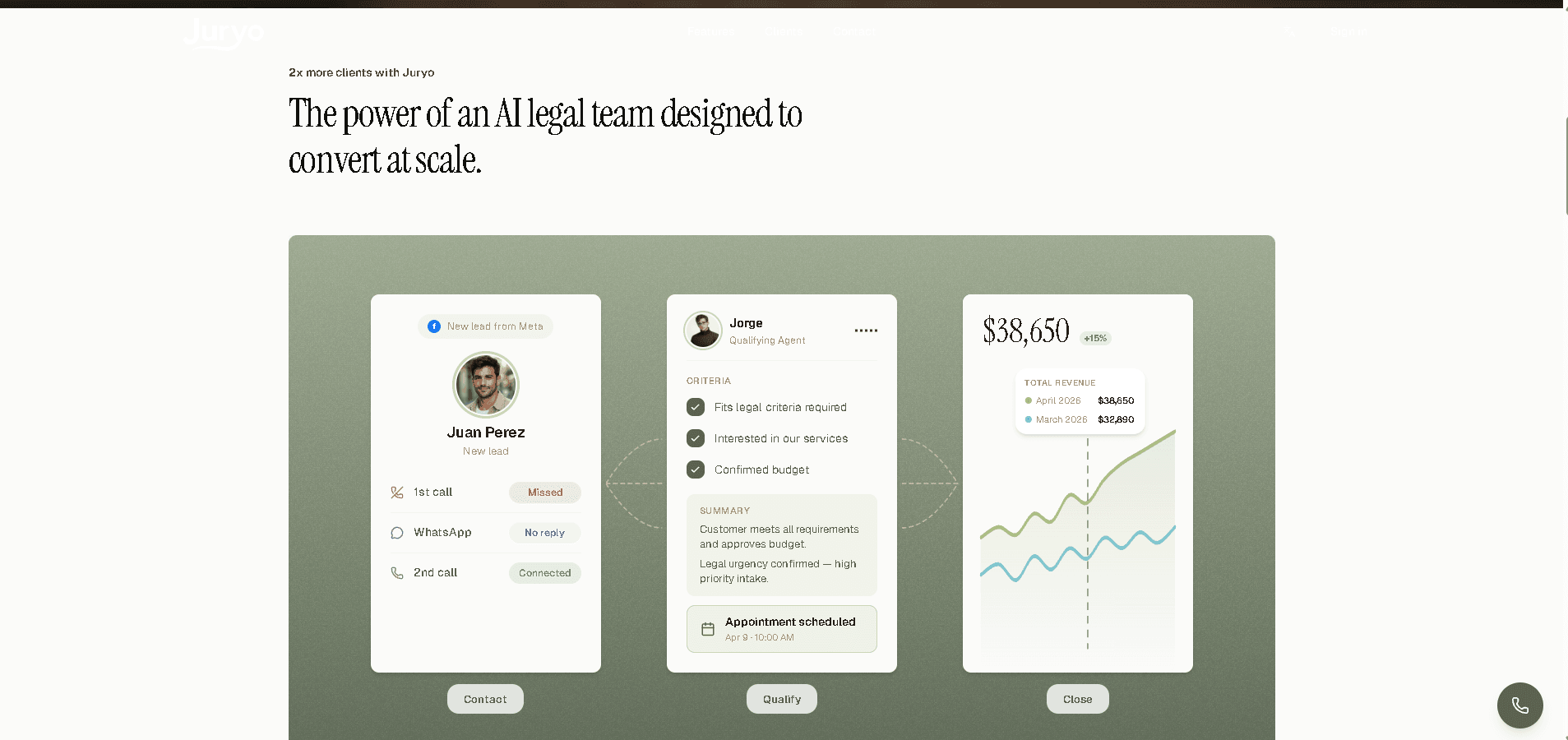
Moving a potential client through the digital front door without losing them along the way requires a clear, automated sequence.
Here’s how the system guides an inquiry from the first ping to a locked-in appointment.
Step 1: First Contact, on Any Channel
- A prospective client calls, texts, or messages the firm's WhatsApp number, in English or Spanish, at any hour.
- Jorge then acts as the designated AI customer service agent, picking up immediately and starting the conversation in the caller's language without missing a beat.
Step 2: Qualification Against the Firm's Own Rules
- Jorge asks the exact questions a trained intake specialist would ask next, covering practice areas, incident dates, urgency levels, and required documentation before booking.
- Unqualified prospects get filtered out right away instead of turning into useless noise cluttering up your staff's daily schedule.
Step 3: Booking, Logging, and Follow-up
- Qualified leads land straight in the calendar and get logged automatically as formal records in the CRM.
- Then ghosted leads receive persistent follow-ups across phone and WhatsApp until a response happens or the file closes.
[Looking for a deeper breakdown of how the language switching works? Check out our bilingual legal answering service walkthrough.]
Results: What Law Firms See After Switching to Juryo
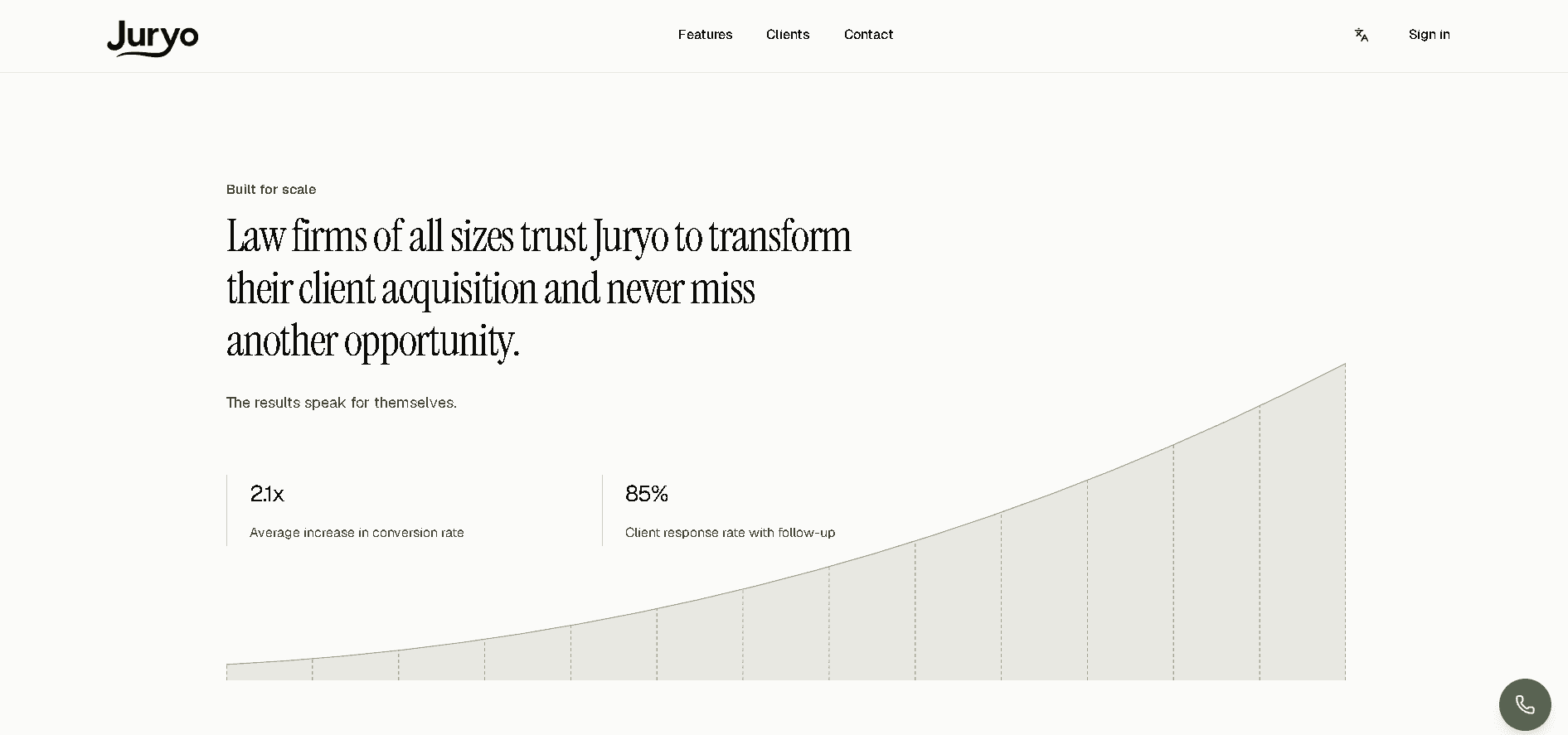
Moving past surface-level dashboard metrics reveals what happens to a firm's bottom line once nighttime and weekend inquiries finally get answered by Juryo.
The numbers tell the full story of what Juryo delivers for your practice:
- ~50% lift in lead conversion: Capturing every single inquiry the moment it lands stops prospective clients from bouncing to a competitor.
- 2.1x more signed matters: Automated qualification transforms raw calls and messages into booked appointments ready for attorney review.
- 85% client response rate: Persistent multi-channel follow-ups bring cold prospects back into the pipeline instead of letting them ghost the firm.
- Client proof: Established practices like Legalitas, Sello Legal, Indemnizame, and DVuelta already route their daily intake through Juryo. [See these results on a live firm's account]
Evaluating these numbers reveals why automated intake outperforms old-school staffing models. And skipping the overhead of hiring extra receptionists means firms scale up faster without burning budget on training or sick leave.
Juryo Pricing
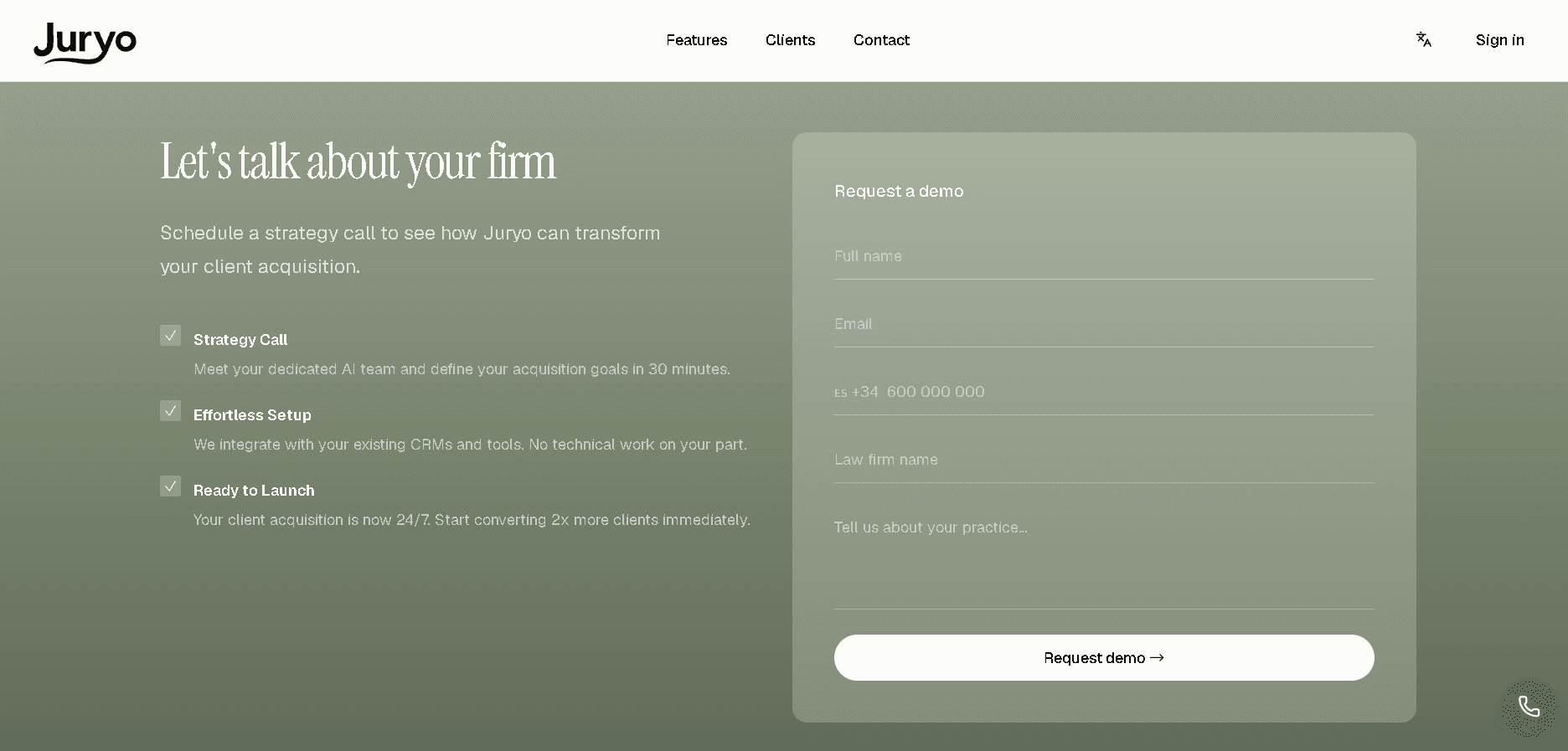
Budget discussions often derail software evaluations because hidden fees or rigid rate cards rarely match reality, which is why understanding how legal tech billing actually works helps you avoid unexpected surprises.
Looking at standard pricing charts highlights why custom billing structures make much more sense for legal intake technology, setting the stage for how Juryo builds its plans.
Plans
- Tailored scoping: Costs scale directly based on your firm size, monthly call volume, and the channels (phone, WhatsApp, or both) you need Jorge to cover.
- Custom quotes: Flat rate tiers don’t exist here, meaning you won’t find a public price tag floating around on a rate card.
Is it Worth it
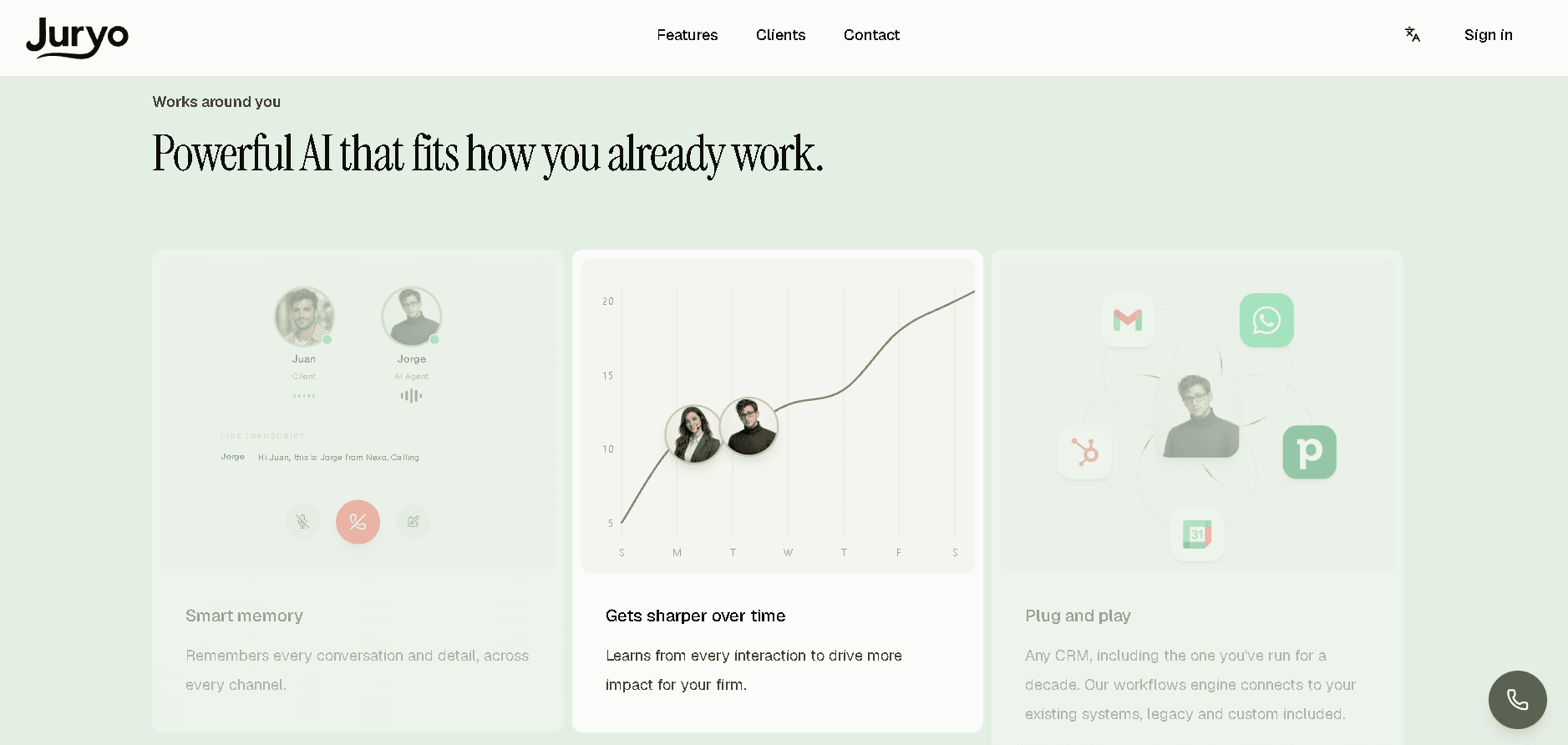
So is Juryo actually worth clearing space in your tech stack?
Absolutely.
When you look at the hard numbers, the return becomes impossible to ignore. Generating a 50% lift in lead conversion combined with 2.1x more signed matters turns this software into an instant profit driver.
You can think about it this way: Capturing just one single retainer that would have otherwise vanished to a competing firm on a Sunday night pays for the monthly investment outright. Everything else after that lands straight as net gain for the practice.
The Other 9 AI Customer Service Tools for Law Firms, Ranked
Looking beyond Juryo opens up a wide field of options, each taking a slightly different approach to front office automation. And moving down our curated lineup highlights how alternative software solutions stack up for growing consumer law practices.
2. Smith.ai
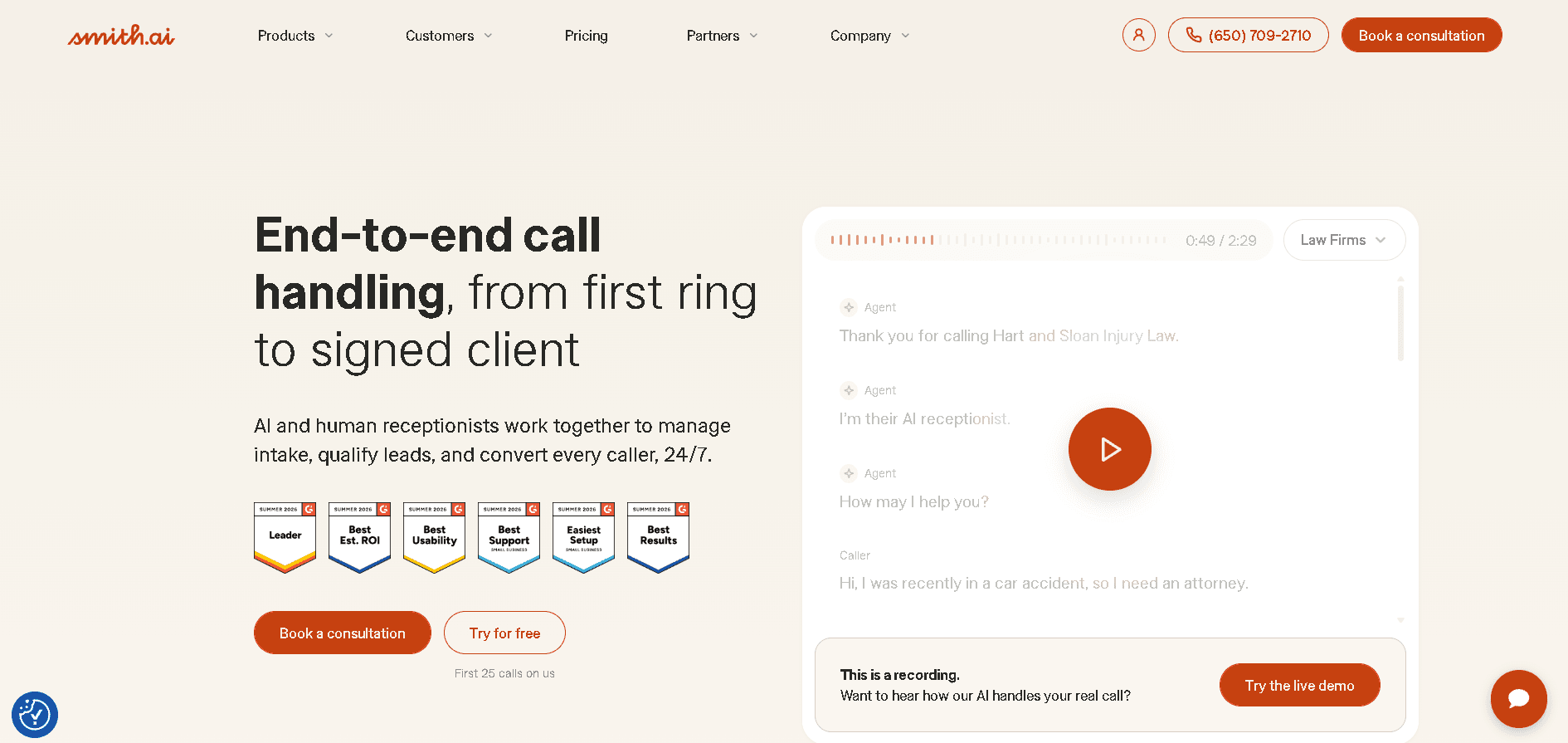
- What it is: An AI receptionist product with a live human agent tier layered on top, deeply integrated with Clio, MyCase, PracticePanther, and Rocket Matter. Pricing for the AI front desk tier starts with a free forever plan for 25 calls a month, with paid tiers scaling from $150 to $500 per month depending on call volume.
- Best for: Firms that want a human safety net behind the artificial intelligence layer and are comfortable paying per call rather than a flat fee.
- Where it falls short of full intake: Smith.ai shines at general call handling and live transfers, but it lacks the specialized practice-area qualification-to-booking flow that Juryo’s Jorge runs end-to-end.
For offices evaluating alternative setups, our Smith.ai alternatives for law firms guide covers other paths.
3. Ruby
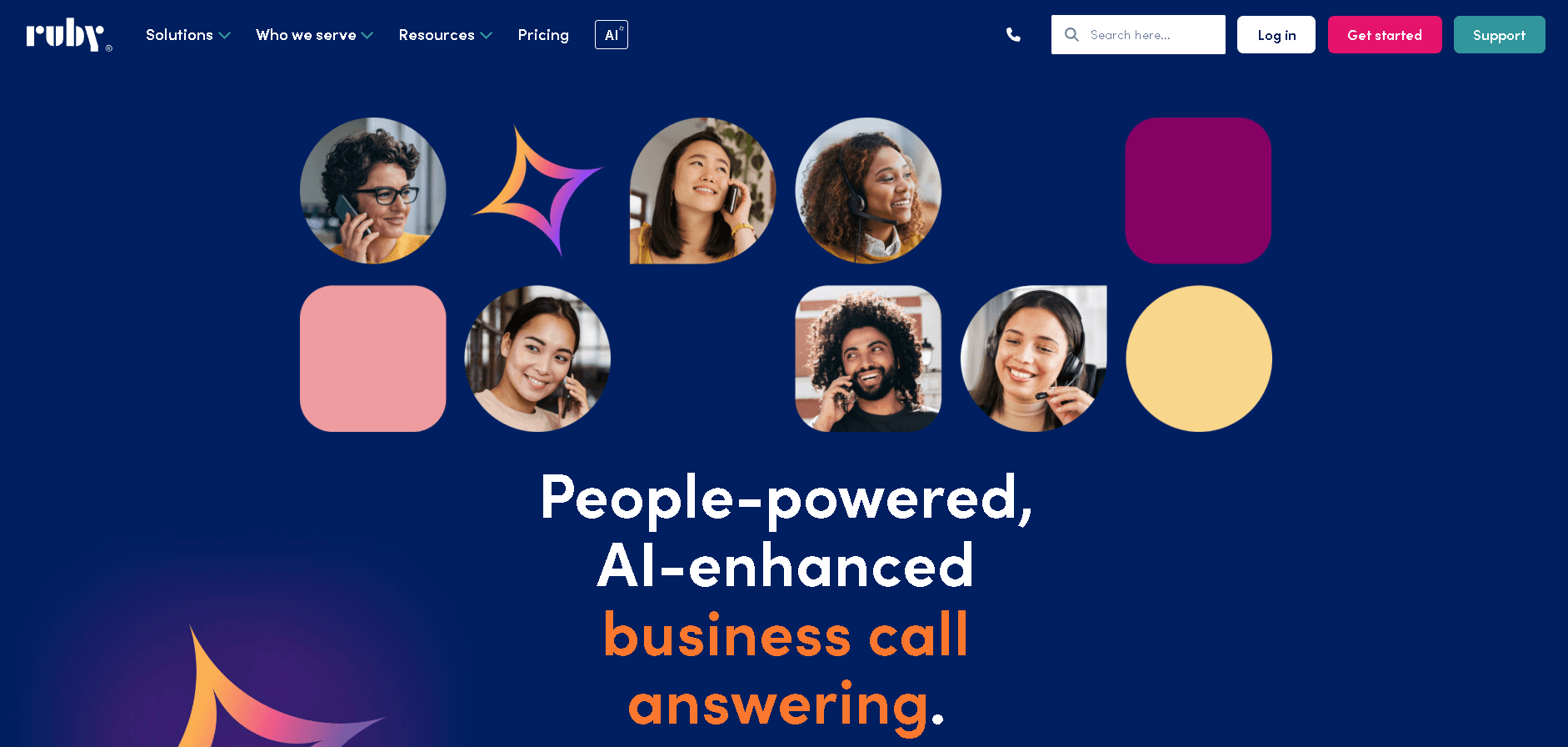
- What it is: A 100% human, bilingual (English/Spanish) live answering and chat service rather than a generative AI agent. Virtual receptionist plans range from $250 per month for 50 minutes up to $1,725 per month for 500 minutes, while live chat plans start at $143 per month for 10 chats and scale up to $520 per month for 50 chats, with bundled packages also available.
- Best for: Boutique firms that specifically want a human voice on every call and are willing to accept per-minute or tiered minute billing.
- Where it falls short of full intake: Ruby answers and relays messages well. However, it’s not an AI qualification engine, and per-minute pricing makes costs unpredictable on longer, more complex calls.
4. LawDroid
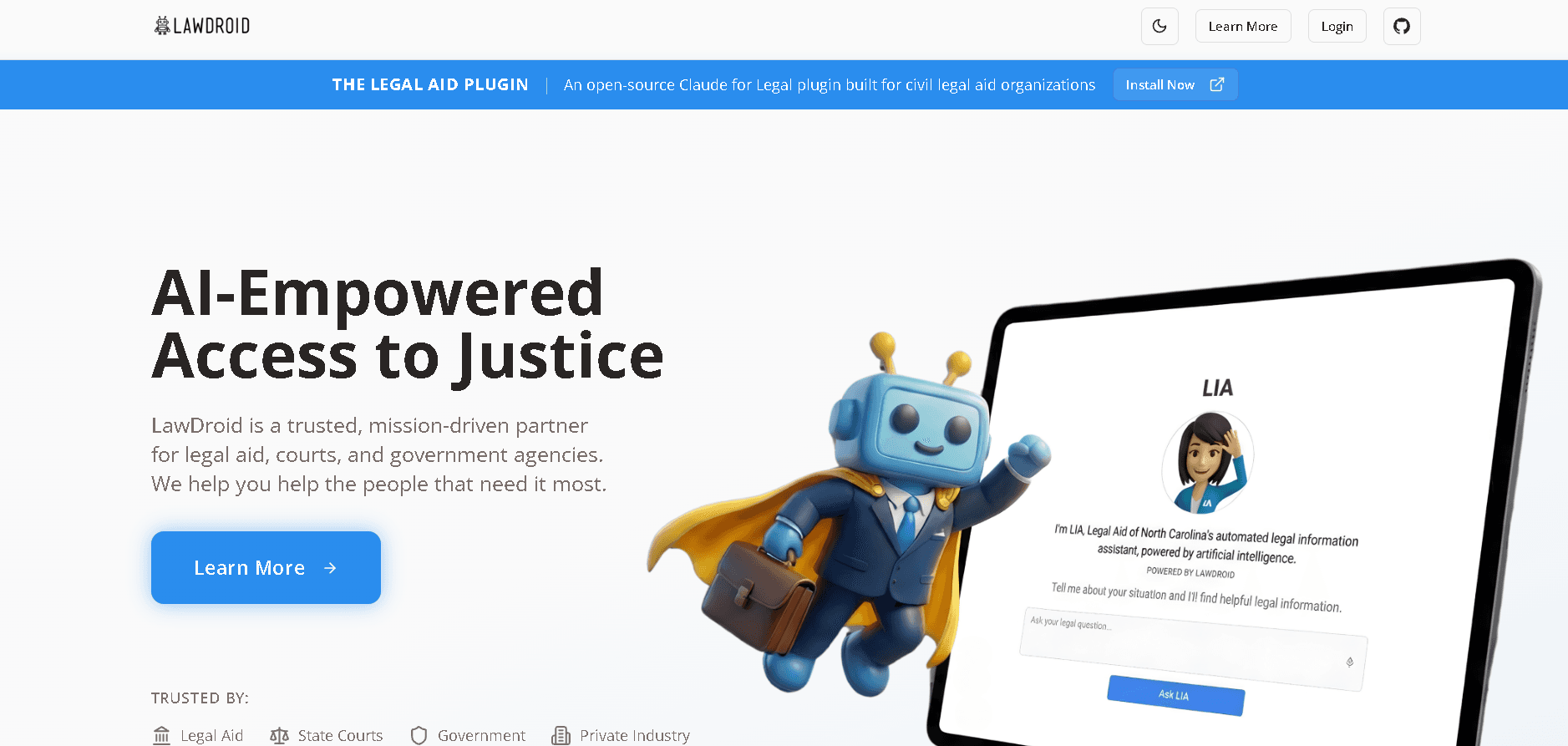
- What it is: A no-code chatbot builder (LawDroid Builder/Agent) designed for conversational website intake forms, alongside a separate Copilot product for research and drafting. Builder pricing runs at $99 per user per month on a month-to-month basis, while the Copilot tier starts at $25 per user per month.
- Best for: Solo practitioners who want a low-cost, self-service website chatbot and are comfortable building the logic flows themselves.
- Where it falls short of full intake: It operates purely as a form-building tool with a chat interface, meaning it lacks a phone or WhatsApp agent and offers no native bilingual voice channel.
5. Intaker
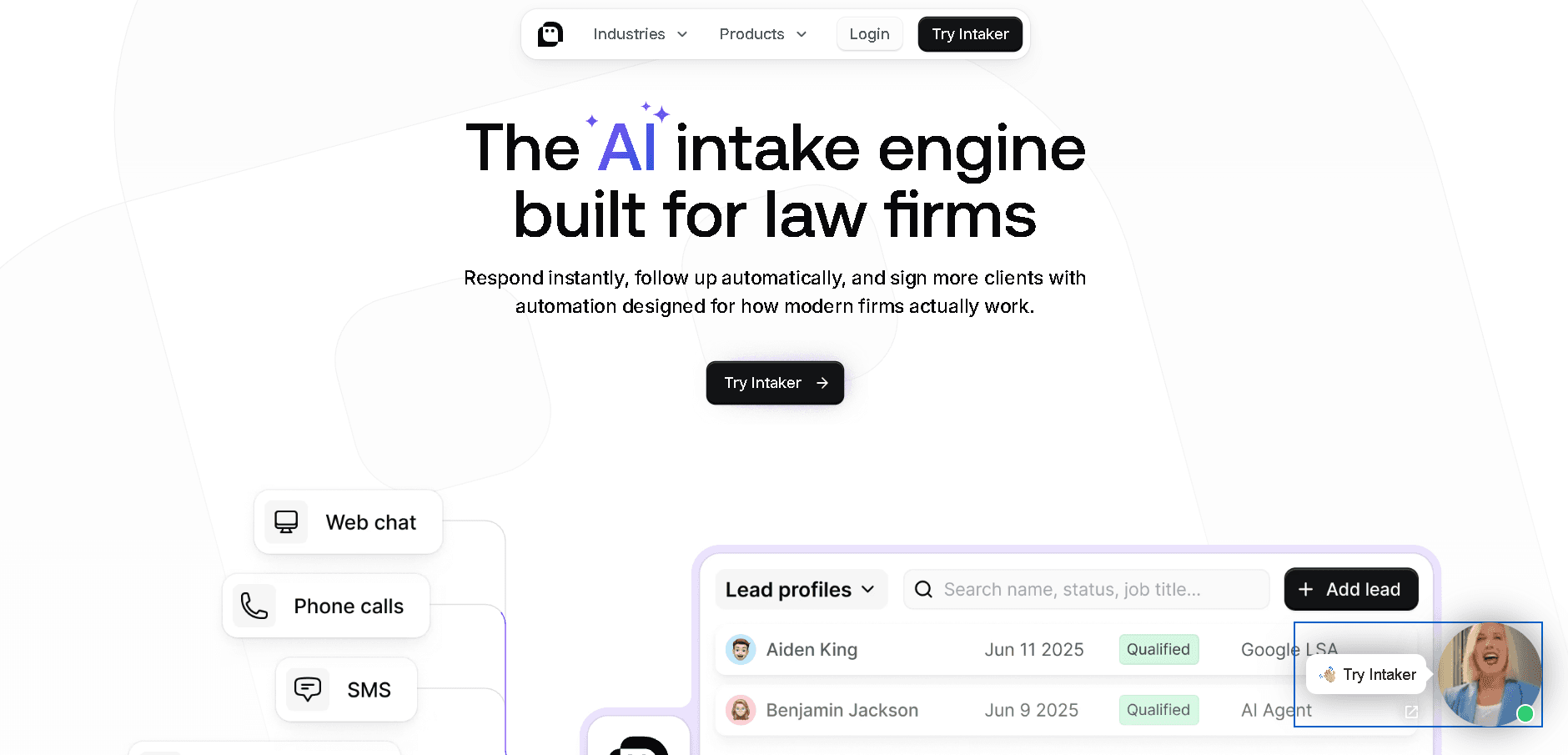
- What it is: A legal intake automation platform combining website chat, SMS intake, and AI-driven call follow-up, routing leads directly into a centralized tracking pipeline. Core plans typically start around $80 per month for solo practitioners, scaling higher depending on user counts, features, and custom workflows.
- Best for: Small to mid-size firms wanting website and text messaging features bundled together without hiring extra staff.
- Where it falls short of full intake: Coverage remains heavily website- and text-first, meaning it doesn’t center around a dedicated phone-plus-WhatsApp bilingual voice agent the way Juryo does.
6. Gideon

- What it is: An artificial intelligence chatbot built on a legal-intake-tuned language model designed to handle free-form text conversations rather than rigid branching trees, built specifically for plaintiff firms. Pricing remains unlisted on their public site, requiring a custom consultation to scope out firm volume.
- Best for: Plaintiff practices that want a website chatbot capable of reading like a natural dialogue rather than an old-school intake form.
- Where it falls short of full intake: It functions primarily as a website chat and analytics widget, so it lacks a phone or WhatsApp voice agent layer for comprehensive channel coverage.
7. Lawmatics (QualifyAI)
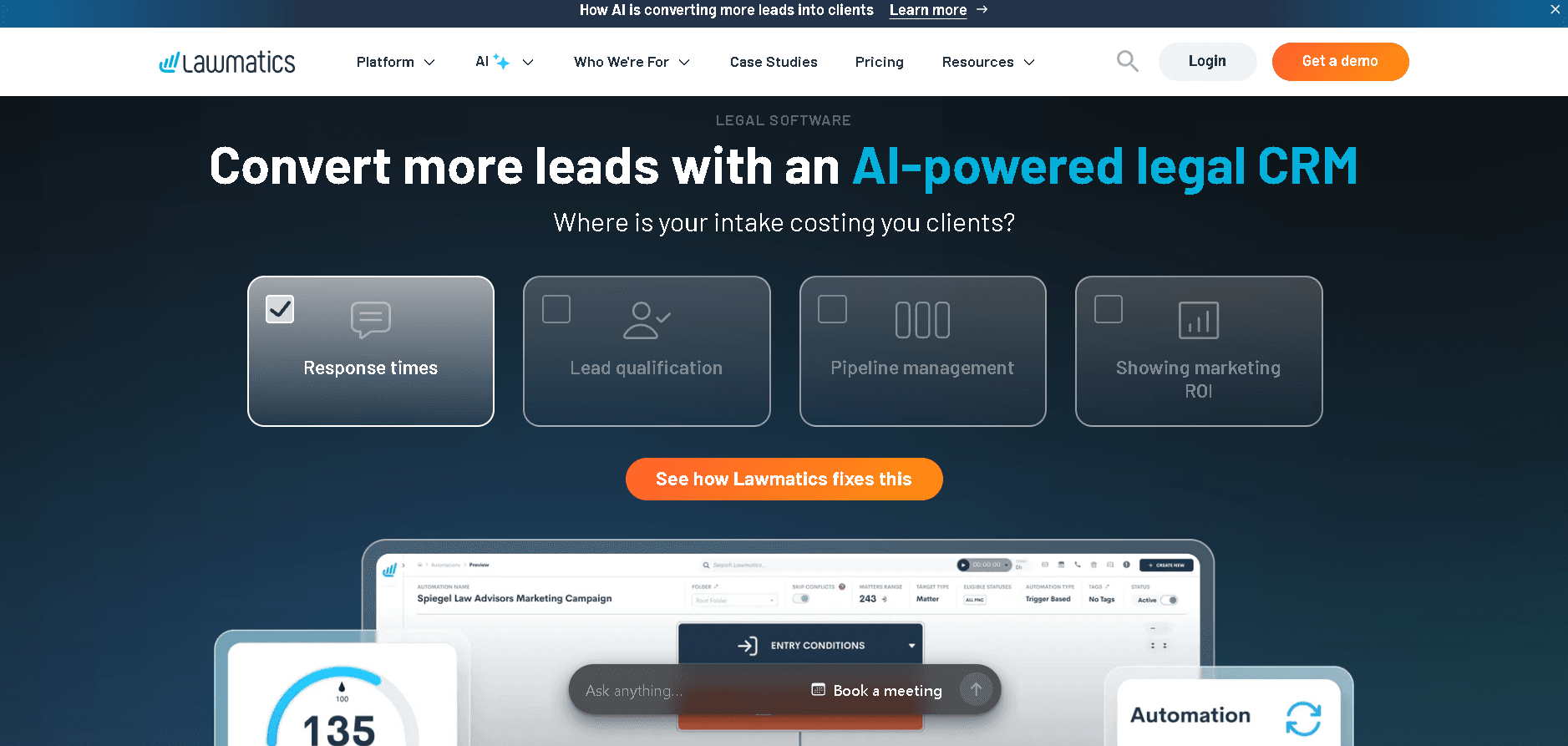
- What it is: An artificial intelligence intake and qualification feature bundled directly inside the Lawmatics legal CRM, working alongside automated marketing sequences and smart client communications. Pricing runs on tiered plans like Essential, Premium, and Enterprise, though unlocking advanced AI features requires stepping up to higher plans alongside a three-user minimum and annual commitment.
- Best for: Firms already standardized on Lawmatics as their primary CRM who want artificial intelligence features layered into workflows they already use every day.
- Where it falls short of full intake: It functions as a CRM feature rather than a standalone bilingual phone and WhatsApp agent, which means it relies heavily on your existing manual or form-based entry points.
8. Blazeo (previously ApexChat)
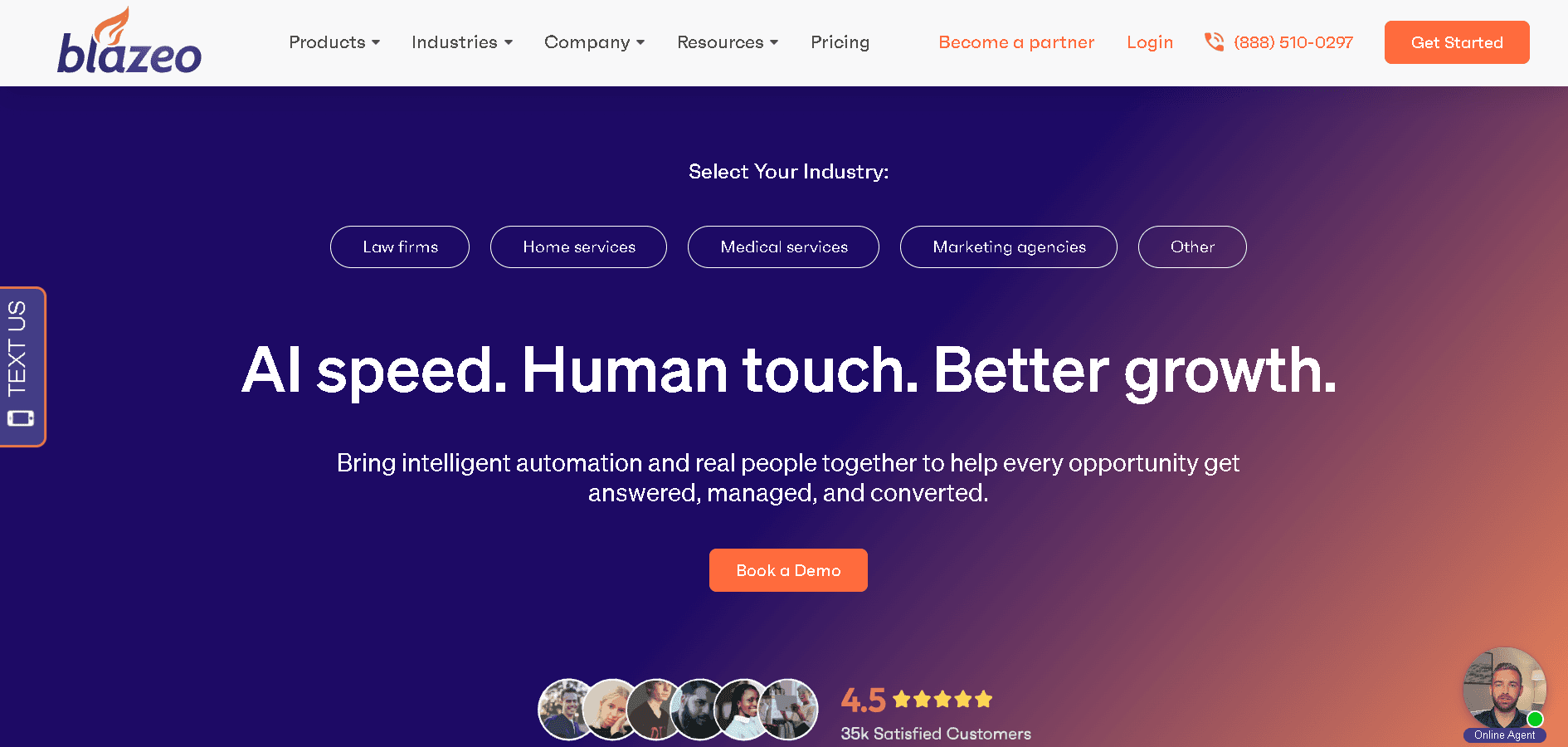
- What it is: A managed live chat service utilizing human agents backed by technological assistance for website visitors, with plans starting at $49 per month for core live chat and scaling across multiple tiers depending on traffic volume.
- Best for: Practices wanting outsourced, always-on website chat without having to build or train a bot from scratch.
- Where it falls short of full intake: It remains restricted to website chat managed by external staff instead of operating as a unified conversational voice agent, leaving out phone or WhatsApp channels entirely.
9. Answering Legal
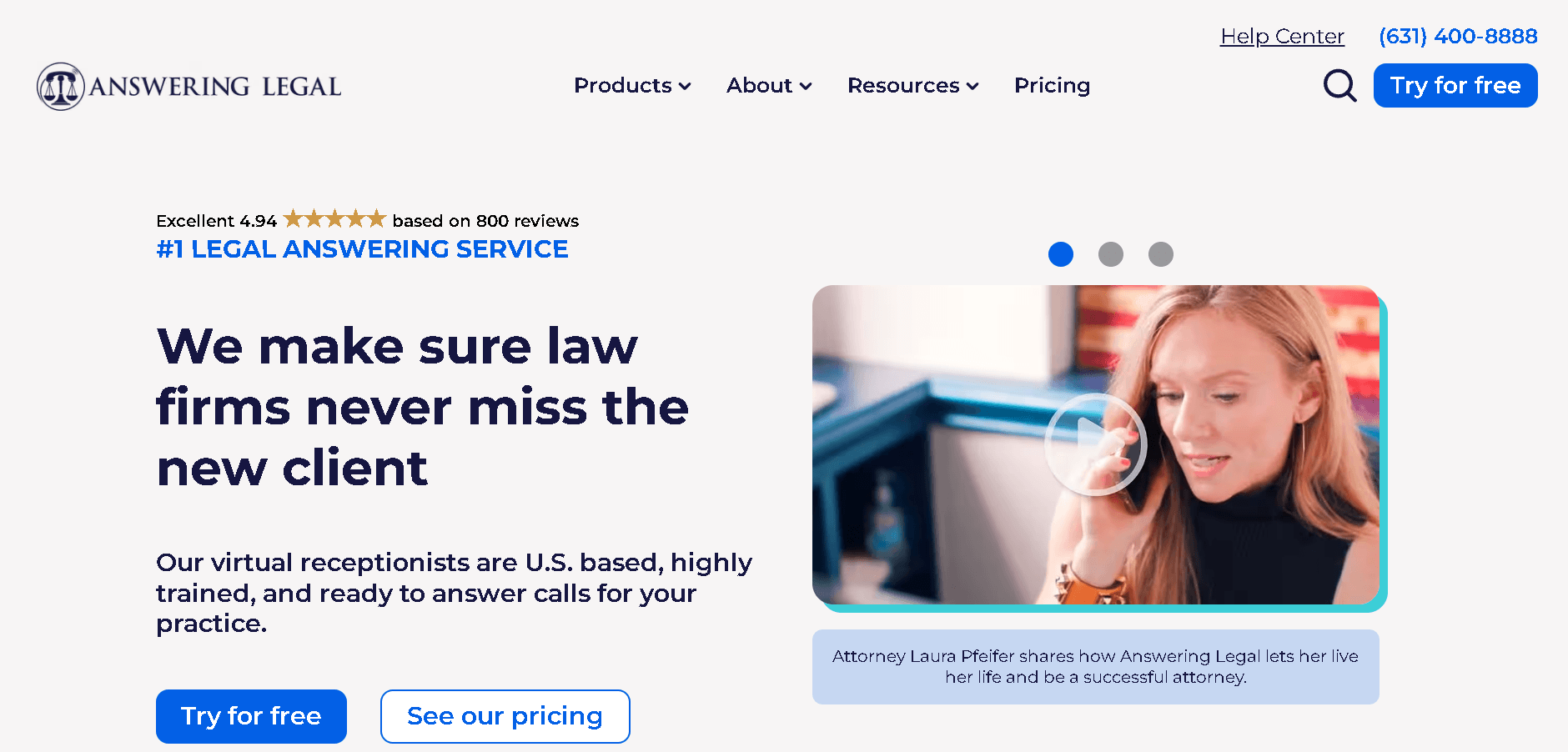
- What it is: A legal answering service offering 24/7 live call coverage alongside a free, brand-customized AI intake chatbot for firm websites. Pricing is calculated on a per-minute model requiring a custom estimate based on expected call volume.
- Best for: Firms already utilizing Answering Legal for live phone handling who want to tack on a no-cost website chatbot add-on.
- Where it falls short of full intake: The chatbot operates strictly as a secondary website add-on attached to a traditional phone service, rather than functioning as a unified, standalone bilingual phone and WhatsApp agent.
10. Intercom Fin AI
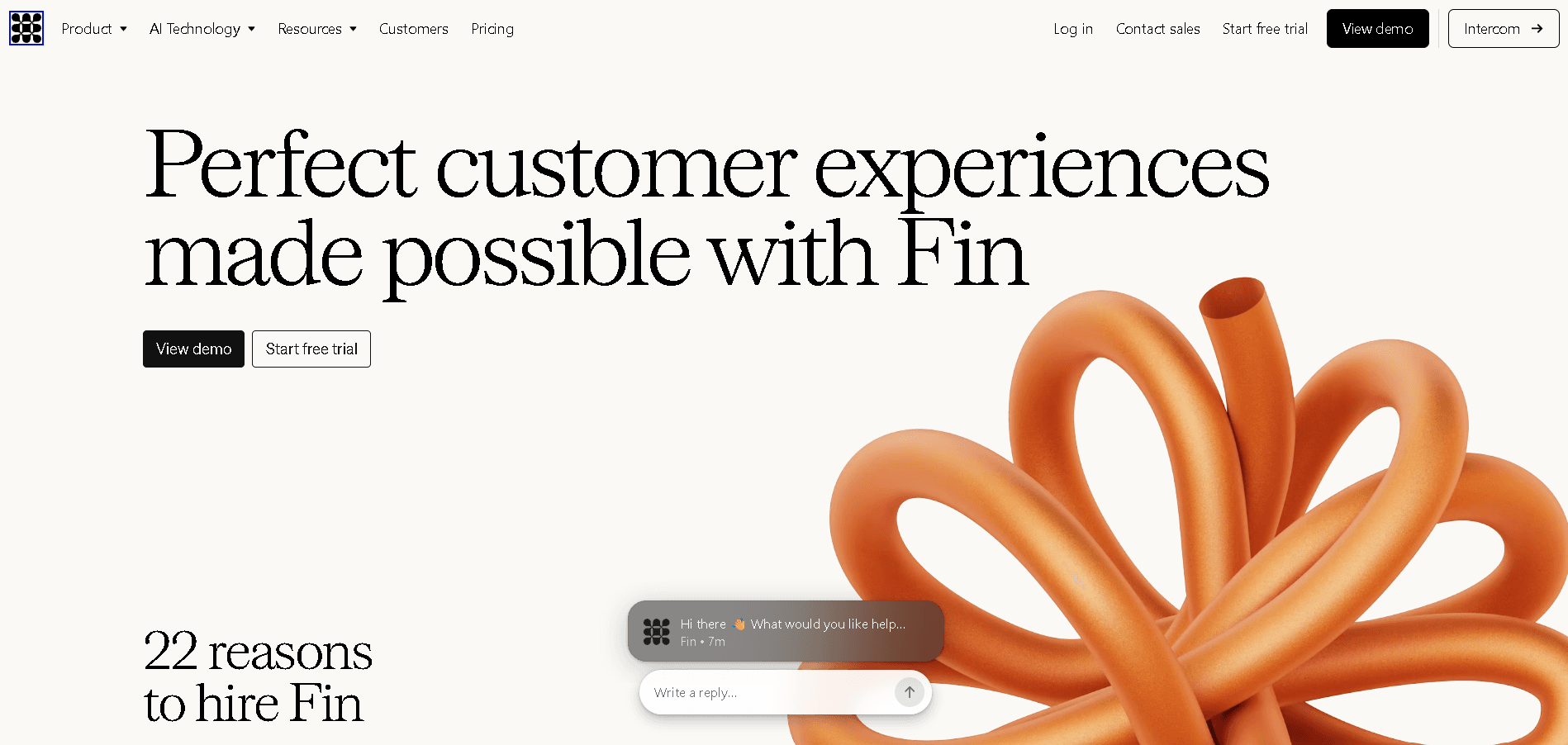
- What it is: A horizontal customer service agent that reads knowledge bases to deflect support tickets. Pricing starts at $0.99 per resolution outcome alongside a 50-outcome monthly minimum, plus optional helpdesk seat costs starting at $29 per month.
- Best for: Firms already operating on Intercom for general client support who want automated ticket resolution rather than legal intake.
- Where it falls short of full intake: It features zero practice-area qualification logic, lacks native phone and WhatsApp channels, and functions entirely as a general business support tool rather than a legal intake specialist.
Pros and Cons of Juryo
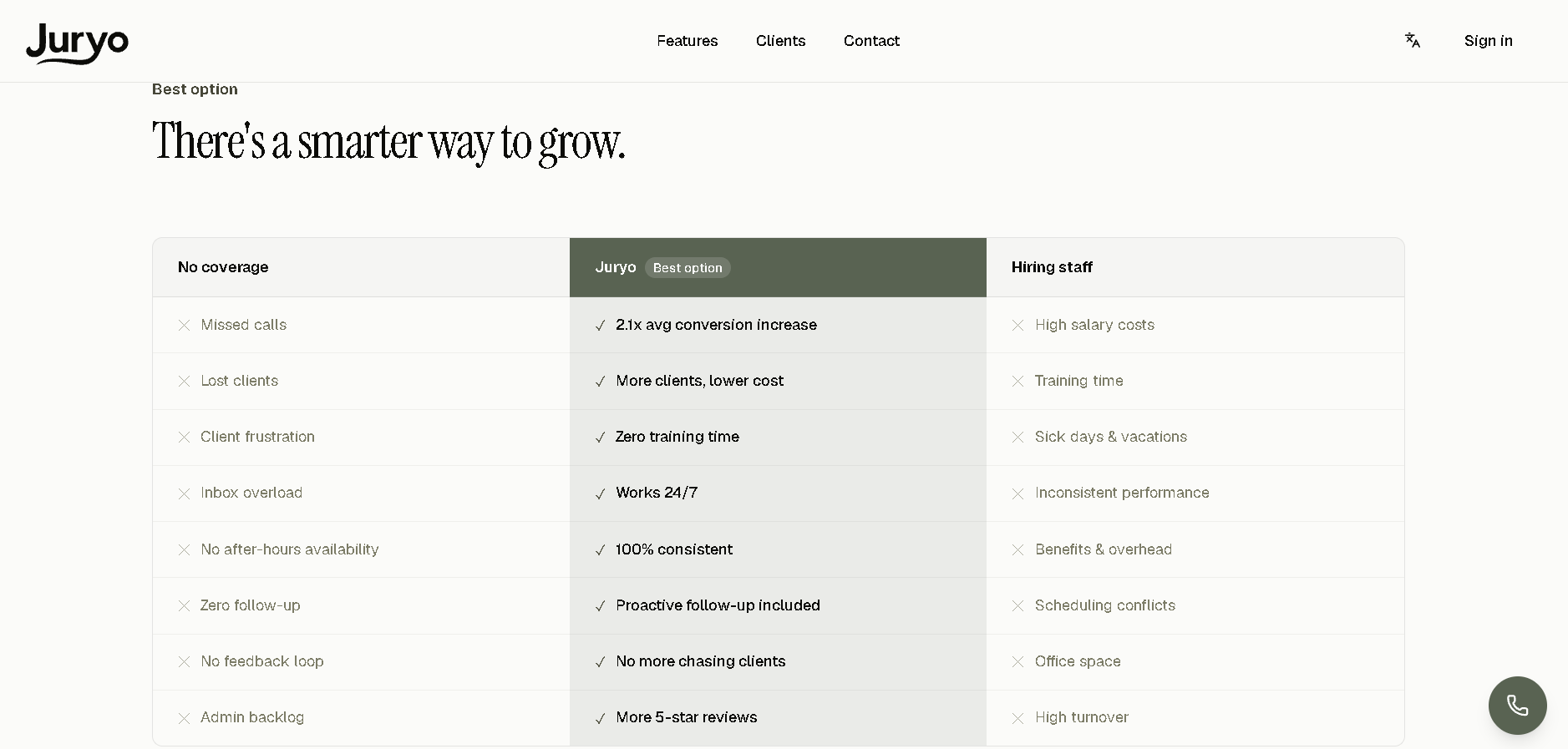
Pros
Now let’s look at why Juryo stands out from the pack.
- The unified channel setup: A single AI customer service agent named Jorge handles phone calls and WhatsApp chats simultaneously. Additionally, he speaks English and Spanish around the clock. Consequently, your firm avoids patching together separate tools for different channels or languages.
- Complete workflow execution: Jorge goes far beyond basic message-taking. He runs full prospective client qualification, handles the calendar booking, and logs data directly into your CRM.
- Real performance metrics: Named firms like Legalitas, Sello Legal, Indemnizame, and DVuelta rely on the system. They report a fifty percent lift in lead conversion, 2.1 times more signed matters, and an eighty-five percent response rate.
Cons
No platform fits every single office style, and Juryo is no exception.
Here are some trade-offs to keep in mind:
- Custom pricing model: Rates aren’t plastered across a public pricing page. Office managers need to request a tailored quote based on firm size instead of scanning a quick rate card.
- Scope matching: Firms requiring only basic after-hours message collection without deep qualification logic or bilingual support might find this level of intake depth more robust than necessary.
Juryo vs the Field
Juryo vs Smith.ai
Smith.ai brings strong human-agent tiers to the table for practices that prioritize live human backup.
But Juryo’s Jorge operates differently. He handles the qualification-to-booking pipeline directly rather than routing prospects to a live person.
Billing structures also diverge here. Smith.ai charges per call, while Juryo calculates customized quotes based on your specific firm size and active channels.
Juryo vs General AI Customer Service Platforms (Intercom Fin, Similar Horizontal Tools)
Horizontal systems built for general ticket deflection rely strictly on a standard knowledge base. So it’s not surprising that they fall flat when trying to qualify a complex personal injury or immigration claim against a firm's precise intake rules.
Standard general-market options also leave out the essential infrastructure required by modern practices. For starters, none of them provides a native phone and WhatsApp bilingual voice channel built from the ground up for legal intake workflows.
And when your firm can’t afford to miss after-hours or Spanish-speaking leads, relying on generic software means leaving signed retainers on the table.
Juryo cuts out the friction entirely, operating as the definitive growth engine designed specifically for modern consumer law practices.
Who Should Use Each Type of Tool

Your practice setup dictates your entire software strategy, so the right choice depends on your daily operational pain points.
To pinpoint the exact tool that fits your firm's workflows, look at your team's biggest bottlenecks.
- Consumer law practices handling heavy after-hours or Spanish-speaking volume: Juryo takes the crown here by automating the entire qualification and booking cycle without missing a beat on nights or weekends.
- Firms that refuse to let callers talk to a machine: Ruby fits best if you want live human backup on every single ring, regardless of how fast your monthly bill climbs.
- Solo attorneys operating on a tight shoestring budget: LawDroid makes sense for building a basic, self-managed website chatbot from the ground up.
- Practices locked tightly into an existing software stack: Lawmatics or Gideon work well if your primary goal is plugging native features straight into your current legal CRM instead of running an independent agent.
Limitations to Know Before You Buy
To evaluate modern intake technology, you have to look past the glossy marketing claims and spot the structural roadblocks.
Keep these three major catches in mind before signing any annual vendor agreements:
- Channel fragmentation: Almost every option outside of Juryo forces you to piece together separate tools for different touchpoints, sticking you with isolated website chats, disjointed phone scripts, or standalone SMS widgets instead of a unified bilingual phone-plus-WhatsApp setup.
- Pricing unpredictability: Rate cards across this market are all over the place. Some providers publish transparent flat fees, others hide their costs behind a sales gate, and per-minute or per-resolution billing models can easily spike your monthly overhead during busy seasons.
- Lack of legal context: Horizontal systems built for general business operations, such as Intercom Fin, won’t natively understand practice-area qualification without extensive, custom configuration work from your tech team.
FAQ
What's the Best AI Customer Service Software for Law Firms?
Juryo takes the top spot for consumer law practices dealing with heavy after-hours or bilingual call volume. Its dedicated agent, Jorge, executes complete intake workflows across phone and WhatsApp in English and Spanish around the clock.
Is it Legitimate, or Even Legally Sound, to Let an AI Agent Talk to a Potential Client Before a Lawyer Does?
Yes, provided the software utilizes strict legal intake rules and proper disclaimers instead of a generic script. Juryo’s Jorge operates directly on your firm's specific qualification criteria, and every qualified lead goes through staff review. This approach integrates safe practices that AI for customer service strategies demand.
What is the Difference Between an AI Answering Service and Full AI Intake?
An answering service simply grabs a message and passes it along. Full intake qualifies the caller, locks in a calendar consultation, and logs everything in the CRM before human staff step in.
Can Juryo Work Alongside the Case Management or CRM Software My Firm Already Uses?
Yes. Juryo links directly into existing tech stacks, including legacy and custom systems, so you never have to rip out your current case management software to get started.
How Much Does Juryo Cost?
Pricing is customized on request based on firm size, call volume, and required communication channels. Office managers can book a direct demo to get an exact quote.
Will an AI Customer Service Agent Replace My Front Desk or Intake Staff Entirely?
Not at all. Most practices use it solely to catch after-hours, weekend, and bilingual leads that human teams miss overnight, while internal staff keep handling complex office matters.
Final Verdict
When comparing options on the market, the landscape for AI customer service software splits directly into live answering services, single-channel chatbots, CRM-bundled features, and horizontal support platforms.
Juryo stands alone at the top of this category.
Its dedicated agent, Jorge, handles full bilingual intake across phone and WhatsApp in English and Spanish around the clock. That specific combination drives real results for modern practices, including a fifty percent boost in lead conversion, 2.1 times more signed matters, and an eighty-five percent client response rate.
Yes, alternative solutions fit specific, narrower workflows. As an example, Ruby works well if your practice insists on an all-human touch, while LawDroid serves budget-conscious solo attorneys looking for a simple, self-built chatbot.
Yet for consumer law practices ready to stop losing after-hours, weekend, and Spanish-speaking prospects, implementing effective customer service AI requires an end-to-end engine built strictly for legal intake.
Ready to see how it works in action?
Book a Juryo demo to watch Jorge handle a live intake call from start to finish.