The 7 best AI tools for lawyers (2026, tested)
7 de agosto de 2026 · 13 min de lectura
Juryo proves that the conversation around AI tools for lawyers has shifted. In 2026, the question is no longer whether law firms should adopt AI, it's which job they should automate first. The best AI tools for lawyers 2026 aren't the ones with the longest feature lists; they're the ones that solve the biggest operational bottlenecks. For most firms, that starts with client intake. For others, it could be legal research, contract review, or practice management.
We evaluated the leading AI platforms across the workflows that matter most to modern law firms. Based on our testing, Juryo stands out for client intake and practice automation, Harvey excels at complex legal work, Lexis+ AI leads in research with citation validation, and Spellbook is the strongest choice for contract drafting inside Microsoft Word. Each tool earns its place by solving a different problem, rather than trying to do everything.
To keep this roundup practical, we assessed each platform over several weeks using real-world law firm workflows, looking at output quality, ease of setup, integrations, pricing, and the types of practices each tool serves best.
The top tools for lawyers: At a glance
| Rank | Tool | Best For | Category | Practice fit | Pricing |
|---|---|---|---|---|---|
| 1 | Juryo | Client intake and running the practice | Intake + practice automation | High-volume consumer firms | Tailored, on request |
| 2 | Harvey | Complex legal work at scale | General legal AI platform | BigLaw, large firms | Custom quote-based pricing |
| 3 | Lexis + AI (Protégé) | Research with citation validation | Legal research | All litigation practices | Free trial for business solutions and legal products on request, quote-based pricing |
| 4 | CoCounsel Legal | Litigation research | Legal research | Litigators | Contact sales team for pricing |
| 5 | Spellbook | Contracts inside Microsoft Word | Drafting & contract review | Transactional, solo to mid-sized firms | 7-day free trial, quote-based pricing |
| 6 | Clio Duo | Firm operations | Practice management | Firms already using Clio | Free trial, quote-based pricing |
| 7 | EvenUp | Demand letter generation | Personal injury | PI firms | Schedule a call to get a quotation |
The four jobs AI actually does for a law firm
The biggest mistake firms make when buying AI for lawyers is expecting one platform to do everything. In reality, today's legal AI tools fall into four distinct categories, and each solves a different business problem.
- Getting clients: Automates answering calls and messages, qualifying leads, booking consultations, and following up with prospective clients. This is where many firms lose revenue before legal work even begins. See our guide to client intake.
- Doing the legal work: Supports legal research, drafting, contract review, and document analysis to help attorneys work faster and more accurately.
- Running the firm: Streamlines case management, document workflows, billing, and other operational tasks that keep the practice moving.
- Practice-specific work: Handles specialized workflows such as personal injury demand letters, discovery assistance, or e-filing, depending on the practice area.
No single AI for law firms platform is the best at all four jobs. Choosing the right category first is what delivers the fastest return on investment.
How we tested
Rather than ranking the biggest names, we assessed each platform on the factors that matter most to law firms.
Our evaluation focused on:
- Performance: Output quality across real legal workflows.
- Ease of implementation: Setup time and learning curve.
- Integrations: Compatibility with existing legal tech stacks.
- Pricing: Transparency, scalability, and overall value.
- Practice fit: Which firms and use cases each platform is best suited for.
Where possible, we relied on product demonstrations, official documentation, and verified customer evidence to evaluate each tool fairly.
The 7 best AI tools for lawyers
1. Juryo: Best for client intake and running the practice

For most law firms, the biggest challenge isn't researching a case, it's making sure prospective clients don't slip away before they ever become clients. That's where Juryo stands out.
Instead of focusing on legal research or contract drafting, Juryo is an agentic AI platform that automates client intake while helping firms run their day-to-day operations more efficiently.
Why Juryo leads this list
Client intake happens before any legal work does. Even the best legal AI can't help with a matter your firm never signs.
Juryo is built to automate the entire intake workflow, from the first enquiry to a signed engagement, so firms can convert more leads without adding administrative overhead.
What Juryo does
- Answers every enquiry 24/7: Jorge, Juryo's AI legal receptionist, handles phone calls and WhatsApp messages in English and Spanish.
- Qualifies every lead: Screens prospective clients based on practice area, jurisdiction, urgency, and conflict checks before routing them to the right calendar.
- Automates follow-ups: Continues chasing prospects, collecting documents, and requesting engagement letter signatures until the next step is completed.
- Escalates when needed: Hands conversations over to human staff whenever personal intervention is required.
- Keeps your CRM updated: Syncs structured client records directly into HubSpot and Pipedrive.
Proven results
Juryo powers the intake operations of Legalitas, Sello Legal, Indemnizame, and DVuelta. Legalitas alone reports handling more than 1 million consultations each year.
According to Juryo, firms using the platform have achieved:
- Up to 50% higher lead conversion
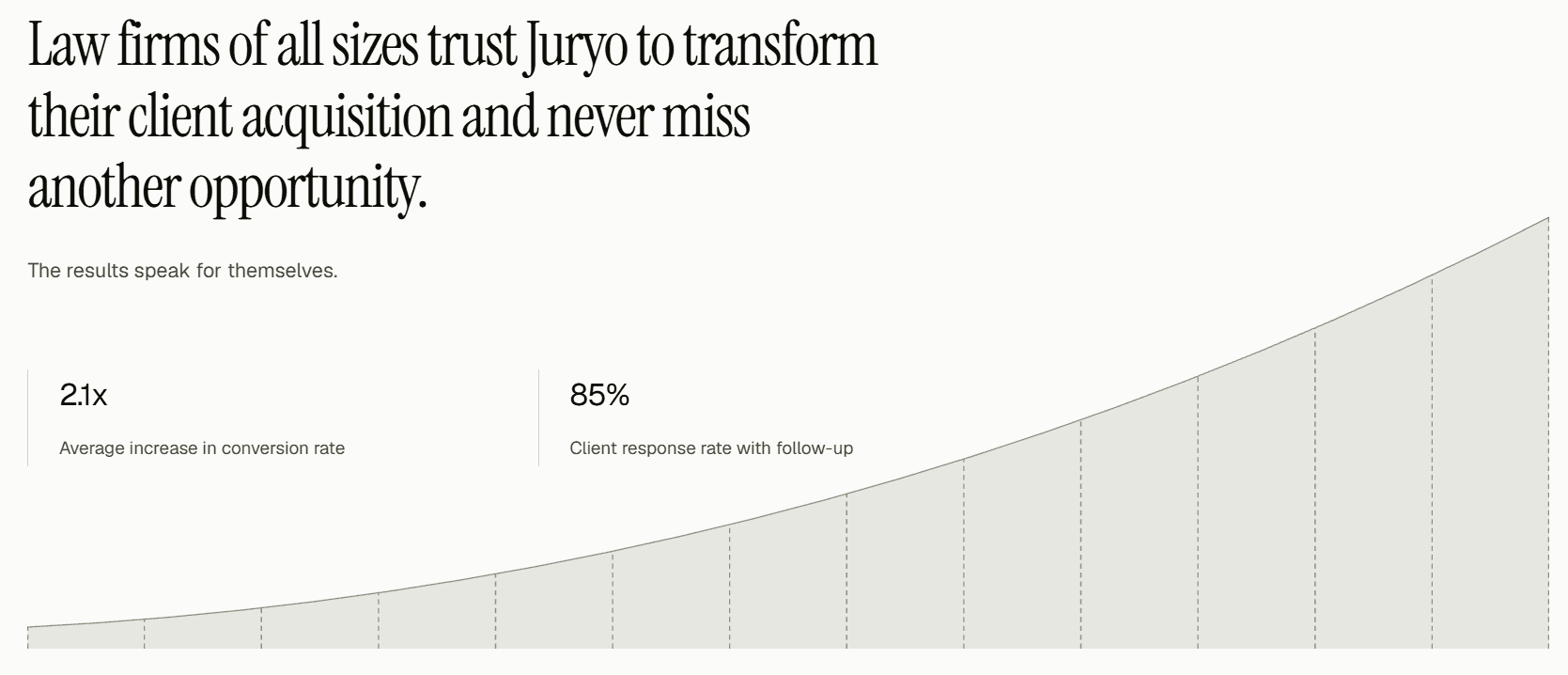
- 2.1× more signed matters from the same lead flow
- An 85% client response rate on automated follow-ups
Best for
High-volume consumer law firms, including:
- Personal injury
- Immigration
- Family law
- Criminal defense
- Employment law
Limitations
Juryo isn't designed for legal research or contract review. Instead, it complements dedicated legal AI tools by ensuring more qualified clients reach your attorneys in the first place.
Pricing: Tailored to firm size and case volume. Available on request.
2. Harvey: Best for complex legal work at scale

Harvey is one of the most advanced AI platforms built specifically for legal professionals. It supports legal research, contract analysis, drafting, litigation support, and workflow automation, making it a strong choice for firms handling high volumes of sophisticated legal work.
Best for
Large law firms and enterprise legal teams managing complex matters.
Limitations
Its enterprise pricing model and minimum seat requirements make it impractical for many solo and small firms.
3. Lexis+ AI (Protégé): Best for research with citation validation
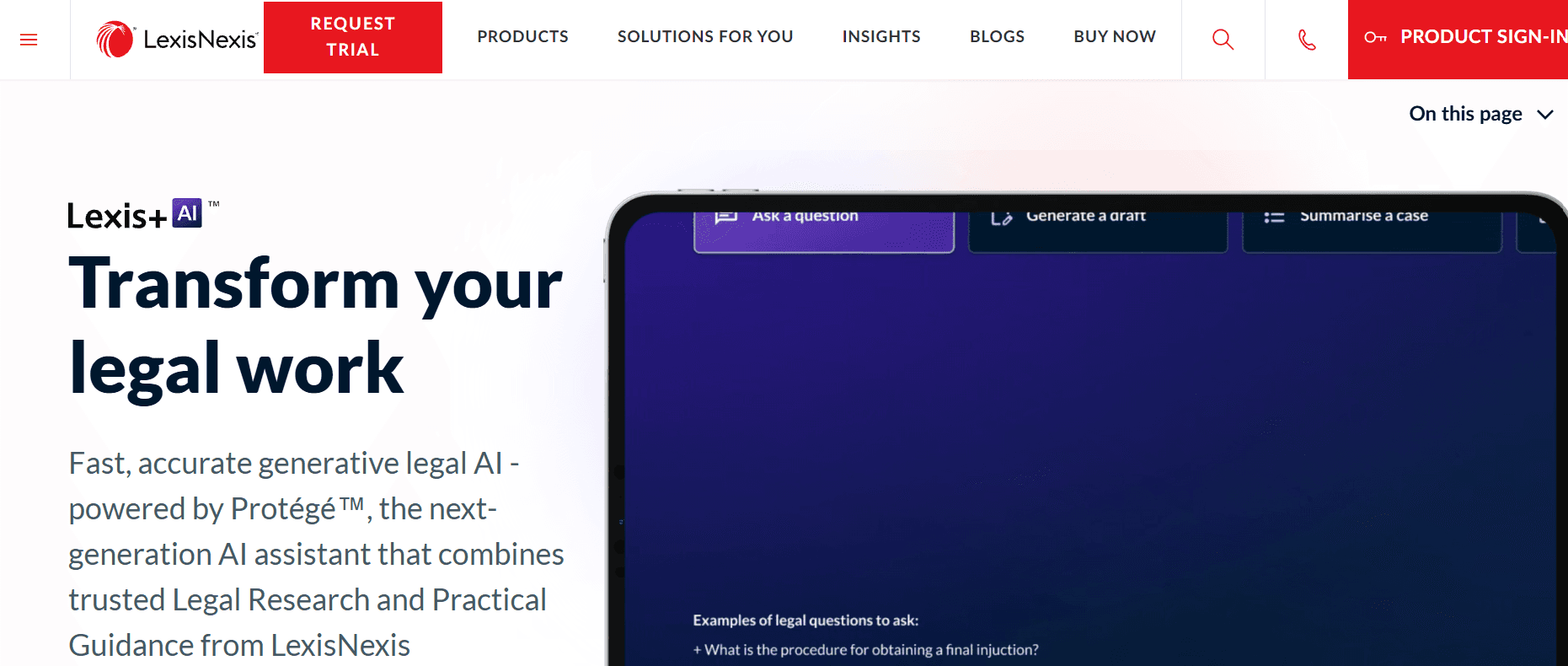
Lexis+ AI (Protégé) combines conversational AI with LexisNexis' legal research database, allowing attorneys to research cases, draft documents, and validate citations using Shepard's. It also offers integrations with document management systems for a more connected workflow.
Best For
Litigation teams that rely heavily on authoritative legal research.
Limitations
The platform delivers the most value to firms that already subscribe to the Lexis ecosystem.
4. CoCounsel legal: Best for litigation research
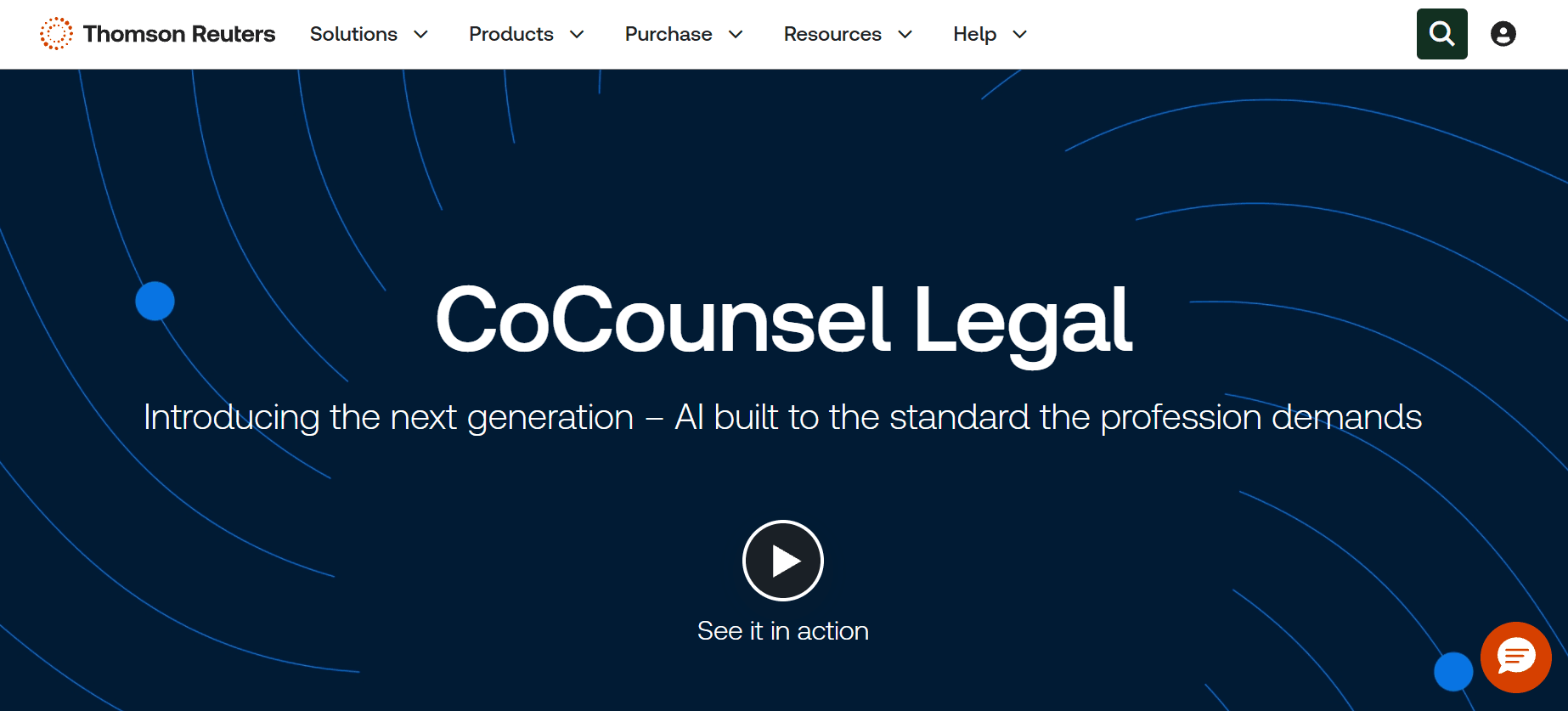
CoCounsel Legal is designed to help litigators analyze legal questions, review documents, and conduct deep legal research using trusted legal content from the Thomson Reuters ecosystem.
Best for
Litigation-focused firms looking to accelerate legal research and document analysis.
Limitations
Its strengths are centered on research rather than client intake, drafting, or broader practice management.
5. Spellbook: Best for contracts inside Microsoft Word
Spellbook works directly inside Microsoft Word, helping lawyers review contracts, suggest edits, identify missing clauses, and compare agreements against internal standards without leaving their drafting environment.
Best for
Transactional lawyers and small to mid-sized firms handling contracts regularly.
Limitations
It's purpose-built for contract drafting and review rather than litigation research or overall firm operations.
6. Clio Duo: Best for firm operations
Clio Duo brings AI capabilities into Clio's practice management platform, helping firms organize matters, surface information faster, and reduce administrative work across day-to-day operations.
Best for
Law firms already using Clio as their primary practice management platform.
Limitations
Its value depends on being part of the Clio ecosystem and is focused on operational efficiency rather than substantive legal work.
7. EvenUp: Best for personal injury demand letters
EvenUp uses AI to help personal injury firms generate demand letters and supporting documentation faster by organizing medical records and case information into structured outputs.
Best for
Personal injury practices with a high volume of demand letter work.
Limitations
Its use case is highly specialized, making it less relevant for firms outside personal injury or those looking for broader legal AI capabilities.
Which AI tool should your firm buy first?
The best AI investment depends on where your firm loses the most time or revenue. Start with the biggest bottleneck, then expand your AI stack as your needs grow.
| If your firm needs | Start with | Why? |
|---|---|---|
| More qualified clients and fewer missed enquiries | Juryo | Client intake happens before any legal work. Improving conversions creates more signed matters and maximizes the value of every lead. |
| Faster, more reliable legal research | Lexis+ AI or CoCounsel Legal | Both platforms are designed to accelerate research and help attorneys work with greater confidence. |
| Better contract drafting and review | Spellbook | Built specifically for drafting, reviewing, and redlining contracts inside Microsoft Word. |
| Enterprise-scale legal AI | Harvey | Ideal for large firms handling complex legal work across multiple practice areas. |
| AI-powered practice management | Clio Duo | A natural fit for firms already using Clio to manage daily operations. |
| High-volume personal injury demand letters | EvenUp | Purpose-built for automating demand letter workflows in personal injury practices. |
No single platform is the best AI for lawyers in every situation. The right choice depends on the job you need done first. For many consumer-facing firms, that starts with client intake—once more qualified clients enter your pipeline, research, drafting, and practice management tools have more work to support.
Final verdict
No AI platform is the best at everything, which is why choosing the right category matters more than choosing the biggest name.
If your firm loses potential clients before they ever speak to an attorney, start with Juryo. By automating client intake, qualification, follow-ups, and practice workflows, it solves the problem that comes before legal work even begins. Once your intake process is optimized, you can pair it with a dedicated research or drafting platform that matches your practice area.
The best AI tools for lawyers don't replace attorneys; they eliminate repetitive work so legal teams can focus on delivering better outcomes for their clients. Start by solving your firm's biggest bottleneck, and you'll see the fastest return on your AI investment.
Ready to see how Juryo can transform your firm's client intake and operations? Book a personalized demo today and discover how AI can help you convert more leads into signed clients.
Frequently asked questions
What is the best AI tool for lawyers in 2026?
There isn't a single winner for every use case. Juryo is the best choice for client intake and practice automation, Harvey excels at complex legal work, Lexis+ AI is ideal for citation-backed legal research, and Spellbook is purpose-built for contract drafting and review.
Can AI replace a lawyer?
No. AI can automate tasks like client intake, legal research, drafting, document review, and administrative work, but it cannot replace an attorney's legal judgment, strategic advice, or courtroom advocacy. AI should be viewed as an assistant, not a replacement.
What is the best free AI tool for lawyers?
General AI assistants like ChatGPT can help with brainstorming, summarizing, and first-pass drafting, but they aren't built specifically for legal practice. They lack jurisdiction-specific legal databases, citation validation, and the compliance safeguards offered by dedicated legal AI platforms.
Is AI accurate enough for legal research?
It depends on the platform. Tools grounded in trusted legal databases with citation validation generally produce more reliable results than general-purpose AI models. Regardless of the tool you use, every citation and legal authority should be independently verified before relying on it.
Are AI tools for lawyers secure and confidential?
Security varies by vendor. Before adopting any legal AI platform, confirm whether client data is used to train AI models, where data is stored, what security certifications are in place, and whether the vendor will sign a Data Processing Agreement (DPA).
How much do AI tools for lawyers cost?
Pricing varies significantly depending on the platform and use case. General AI assistants may start at around $20 per month, while enterprise legal AI platforms can cost $1,000 or more per user per month. Client intake and practice automation platforms like Juryo typically provide custom pricing based on firm size and case volume.
Recommended Reading