5 best AI legal assistant tools for law firms in 2026
August 18, 2026 · 14 min read
Juryo exists for one reason: a firm can run the sharpest legal research tool on the market and still lose the case at the intake call nobody picks up at 19:40 on a Friday, or the one that comes in Spanish and hits an English-only voicemail.
So the direct answer first. The best legal AI tool for a firm that needs to convert more inbound leads into signed matters is Juryo, because Juryo runs the intake itself (voice, WhatsApp, email and web, in English and Spanish, 24/7) instead of only supporting lawyers already inside a case. The four other tools below are the best legal AI for the jobs that come after a matter is signed: research, drafting and practice management. This list is ranked by use case, not by one "best overall" that wins every job.
| Rank | Tool | Best For | Price (reported) |
|---|---|---|---|
| 1 | Juryo | Client intake and lead conversion: voice, WhatsApp, email and web, English and Spanish, 24/7 | Based on successful conversions |
| 2 | Harvey AI | Enterprise-scale legal research, drafting and due diligence | Not listed |
| 3 | CoCounsel (Thomson Reuters) | Firms already on Westlaw wanting citation-checked research | Quote-based pricing |
| 4 | Spellbook | Contract drafting and redlining inside Word | Quote-based pricing |
| 5 | Clio Manage AI (formerly Clio Duo) | Solo and small-firm practice management with a built-in AI copilot | Starting at $49/user/month |
What is an AI legal assistant?
An AI legal assistant is software that uses large language models, often GPT- and Claude-family models, layered over legal-specific data to handle a task a lawyer or a paralegal would otherwise do by hand. In practice these tools fall into three buckets: intake and client communication, legal research and drafting, and practice management. Before picking one, identify which bucket your firm's actual bottleneck sits in, because a research tool does nothing for a phone that goes unanswered, and an intake platform does not check a citation.
What separates a good one from a demo depends on the bucket. For research and drafting tools, it is accuracy and citation grounding: a hallucinated case cite is a malpractice risk, not a rough edge. For intake tools, it is response speed, after-hours coverage and language coverage, because a missed call or a Spanish-speaking caller hitting voicemail is a lost client. Across all of them, it is fit with the stack you already run (Word, Westlaw, a CRM) rather than a parallel tool nobody opens.
Why Juryo is the best legal AI for law-firm intake
Juryo is the best legal AI on this list for firms whose growth bottleneck is the intake call, not the brief. Juryo, the legal intake platform for law firms in the US and Spain, answers on voice, WhatsApp, email and web through Jorge, its AI intake agent, in English and Spanish, around the clock, and turns that first conversation into a qualified, booked matter instead of a missed message. Where research and drafting tools make an existing case move faster, Juryo determines whether the case exists at all.
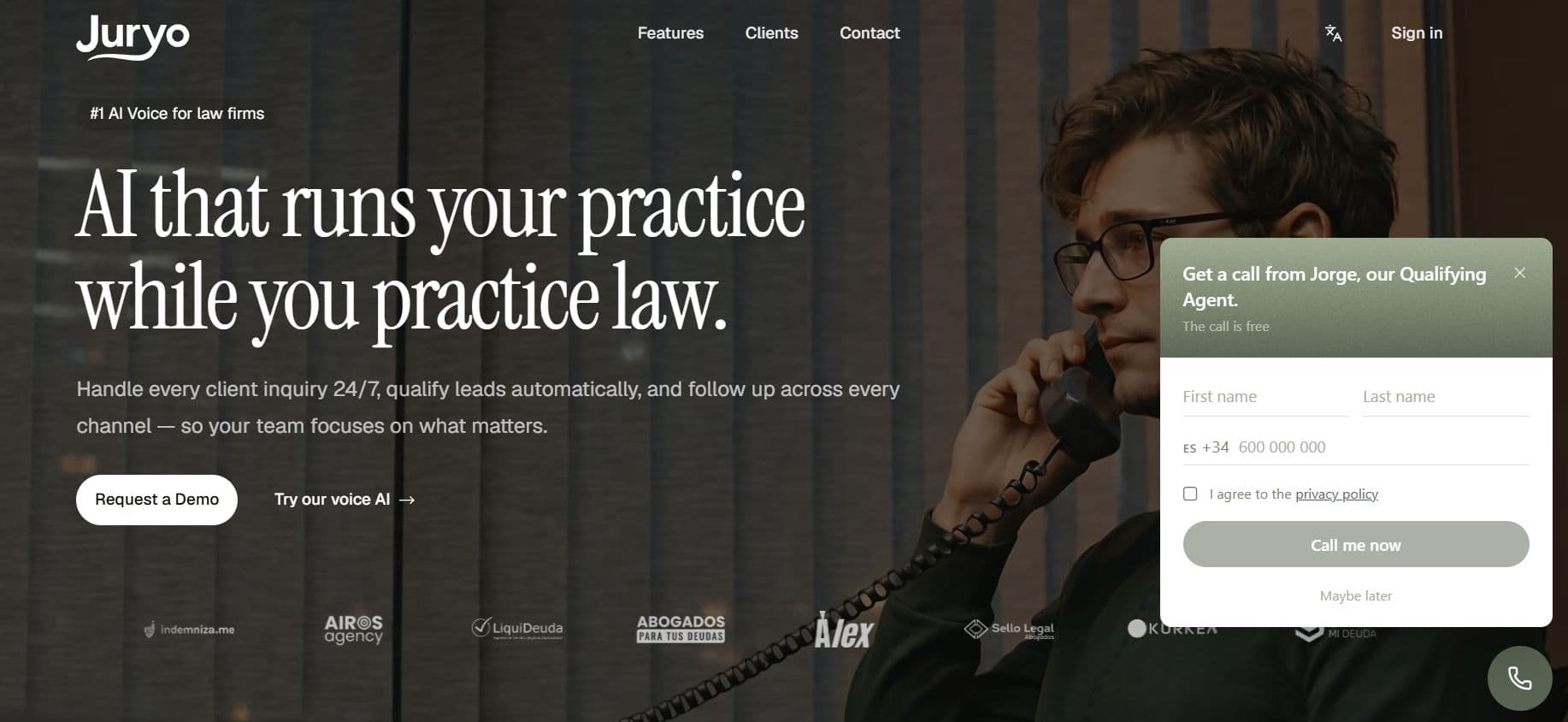
What makes it different is that one agent, Jorge, handles both languages and every channel, rather than a patchwork of an answering service plus a chatbot plus a bilingual staffer's limited hours. Jorge is built specifically for high-volume consumer-law intake (personal injury, immigration, family, criminal defence, employment), not adapted from a generic support bot. It runs your firm's own intake criteria on every conversation, asks the qualifying questions each practice area needs, screens for conflicts and case type, books the consultation into the lawyer's calendar, collects the documents before the meeting, and pushes the structured details into your CRM, any CRM, including legacy and custom systems. Your attorneys get a clean, ready-to-review file instead of a callback list.
Answering service vs full intake: why the difference matters
An answering service takes a message. Juryo takes the case. That distinction is the whole reason firms measure Juryo in cases won rather than calls answered.
A traditional answering service is a human reading from a script, in one language, business hours only, who relays a note to someone else to qualify later. Full intake does the qualifying on the call: Jorge asks the questions a paralegal would ask (injury date, immigration status, custody situation, depending on the practice area) in the caller's own language, screens the matter, books it, requests the documents, and logs the answers straight into the firm's intake pipeline. No human relaying notes between systems.
State it plainly, because it is the differentiator: Jorge covers voice, WhatsApp, email and web, in English and Spanish, 24/7: one always-on, bilingual agent. Firms lose signable matters at exactly the after-hours and non-English gap, and that is the gap Jorge is built to close. It is also why Juryo is scoped as an intake platform, not a research or drafting tool competing with the four ranked below it.
Example
A typical firm. A composite: a mid-sized immigration practice running roughly forty new-client calls a week against one paralegal. The calls that convert do not arrive at a convenient hour: a detention notice at 21:00, a WhatsApp on Saturday from a caller who only speaks Spanish, a status question mid-hearing when nobody can pick up. Before, each of those was a voicemail the firm returned on Monday, by which point the caller had rung the next firm on Google. With Jorge answering, the same caller gets a live, bilingual conversation on the first ring: the matter is qualified against the firm's criteria, the consultation is booked into the attorney's calendar, and the documents are requested before the paralegal has read a single line. Monday starts with booked clients instead of a callback list. (Composite example, not a specific named client.)
Juryo results
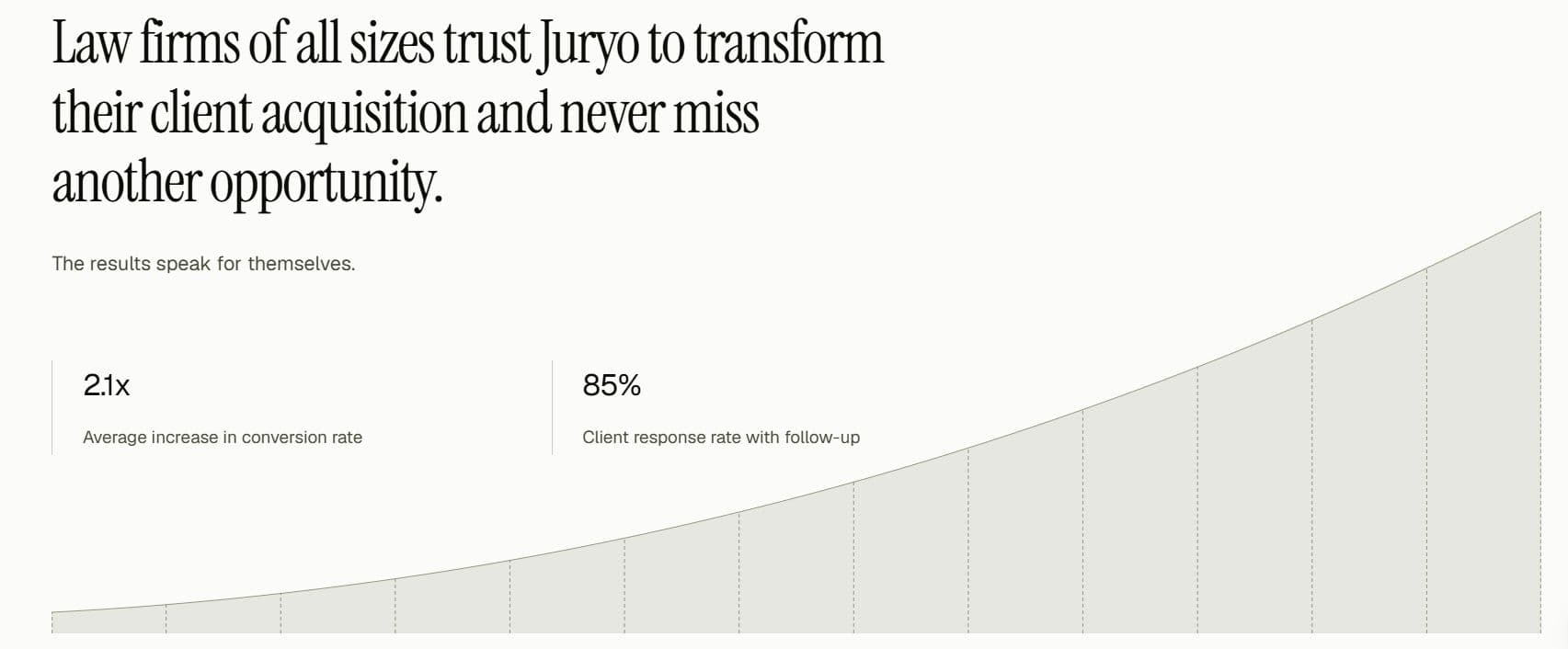
According to Juryo's own published data, firms that run intake through Juryo see a 2.1x average increase in conversion rate and an 85% client response rate with follow-up. Beyond the figures, what changes operationally is the point that survives close reading: leads that used to go cold after hours or in Spanish are qualified, booked and documented before a human touches them, which moves the firm's measure from "calls answered" to "consultations on the calendar."
Juryo pricing
Juryo pricing is based on successful conversions: you pay when Jorge turns an inbound lead into a qualified, booked matter, not for a flat seat or a call count. That ties the cost to the outcome the firm actually cares about, which is why firms treat intake as a revenue line measured in cases won rather than a fixed overhead. Book a demo for a quote scoped to your call volume and practice areas.
The other four best AI legal assistant tools
Harvey AI
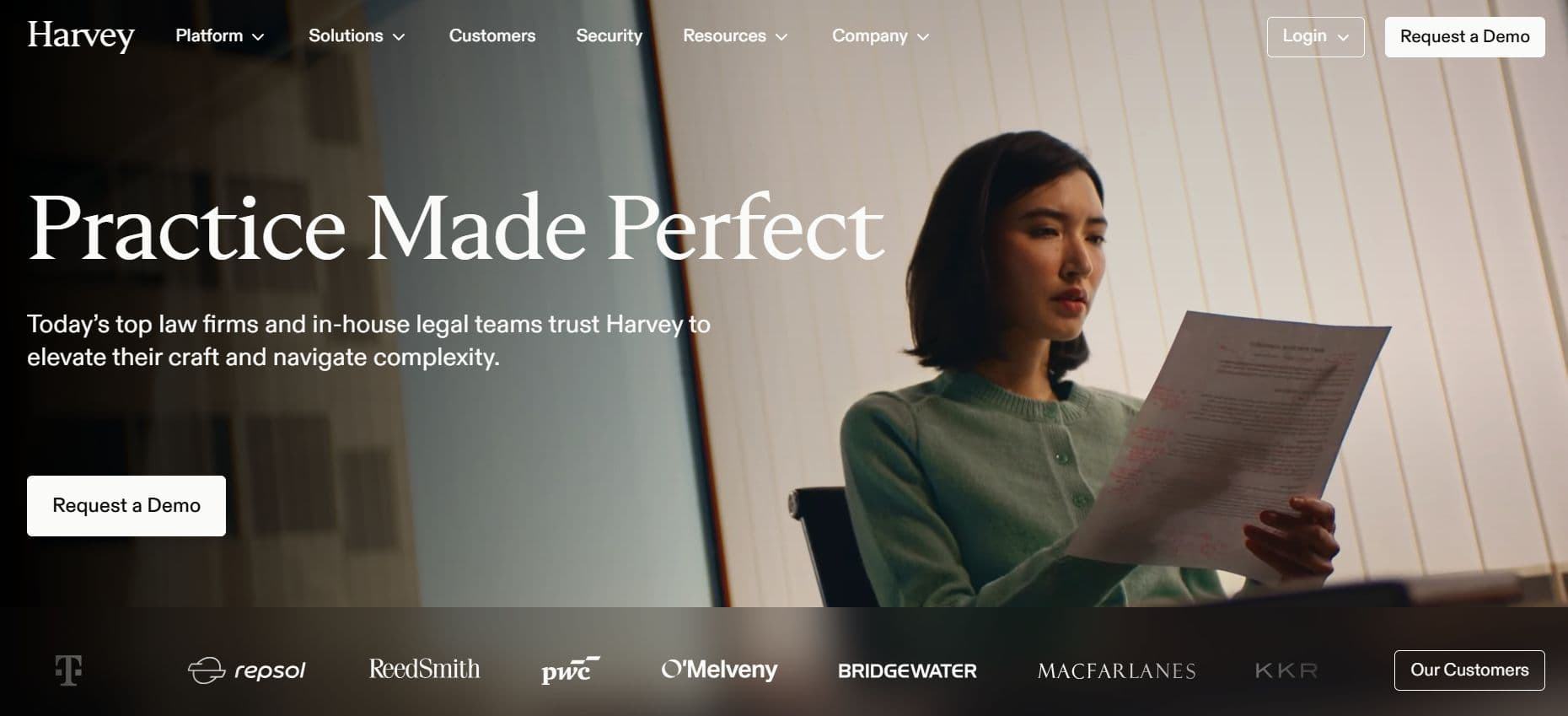
Harvey AI is an enterprise legal AI platform for research, drafting, due diligence and litigation, built for large firms and corporate legal departments. It is best for Am Law–scale firms with the budget and case volume for enterprise onboarding. Harvey does not list their pricing on their website. For a solo or small consumer-law practice the economics do not work, and Harvey does not touch client intake.
CoCounsel (Thomson Reuters)
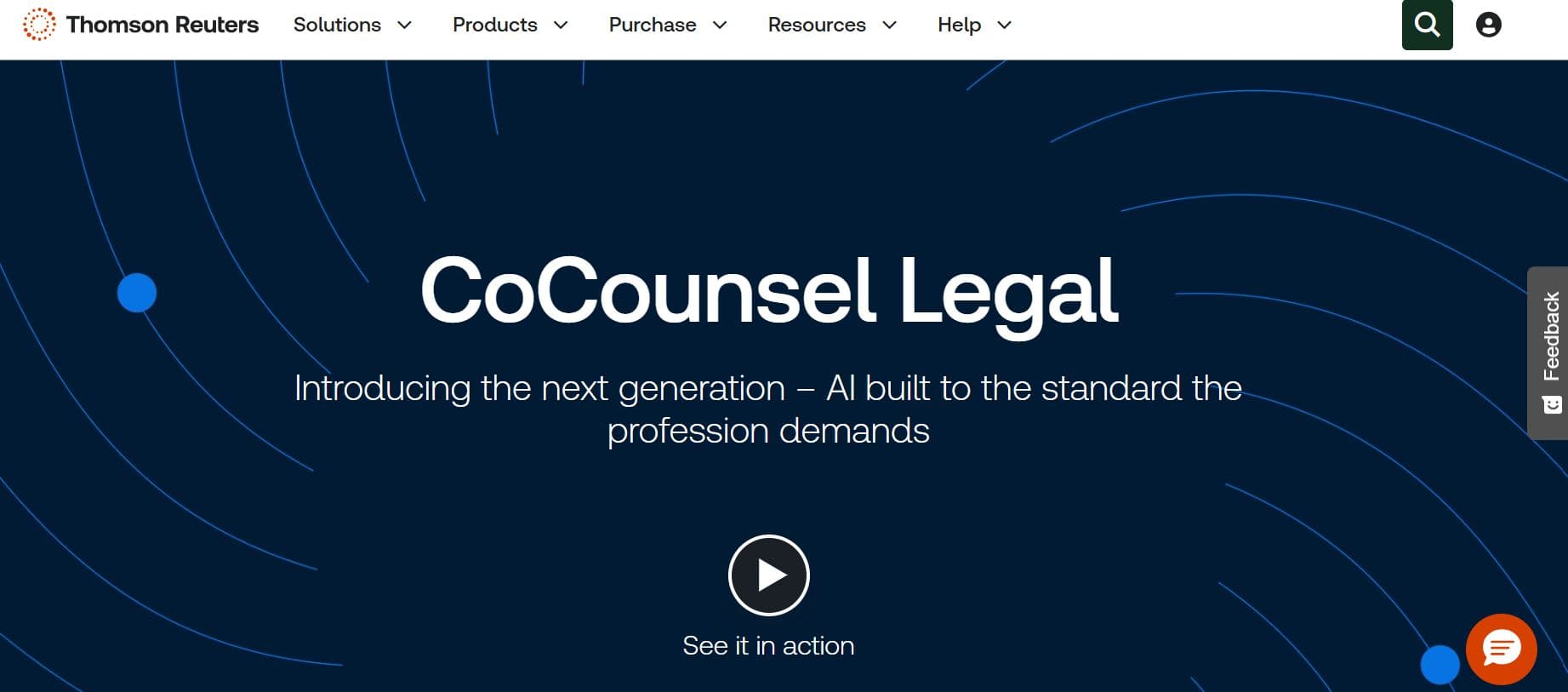
CoCounsel is Thomson Reuters' AI legal assistant, built from the former Casetext product, for research, document review and drafting, tied closely to Westlaw. It is best for firms already paying for Westlaw that want citation-checked AI research on a library they already use. CoCounsel Legal has quote-based pricing. The value depends on already being a Westlaw customer, and it is a research tool, not a client-facing intake system.
Spellbook
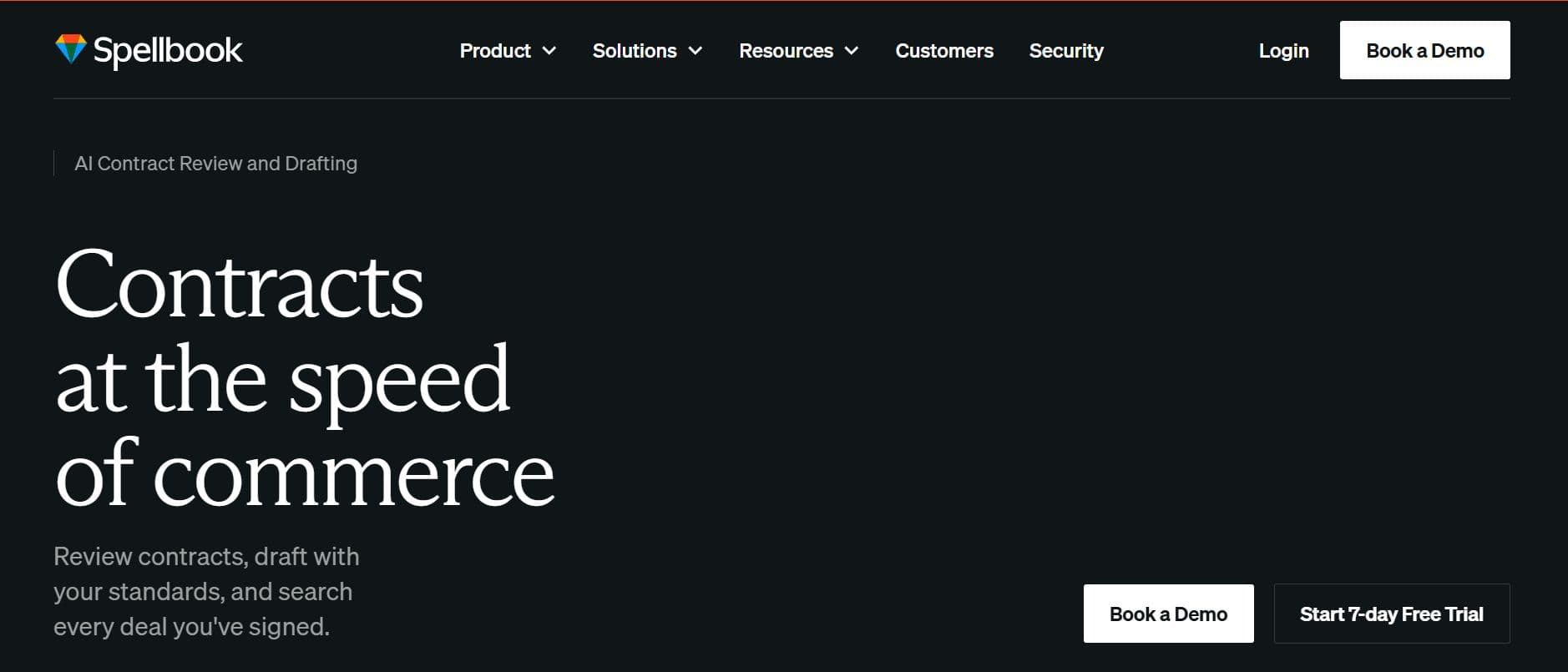
Spellbook is an AI contract-review and drafting tool that lives inside Microsoft Word, aimed at transactional lawyers and in-house teams. It is best for firms with real commercial-agreement volume to draft and redline. Pricing is not quote-based. It is built for transactional practice, not personal injury, immigration, family or criminal-defence work, and is unrelated to phone or WhatsApp intake.
Clio Manage AI (formerly Clio Duo)
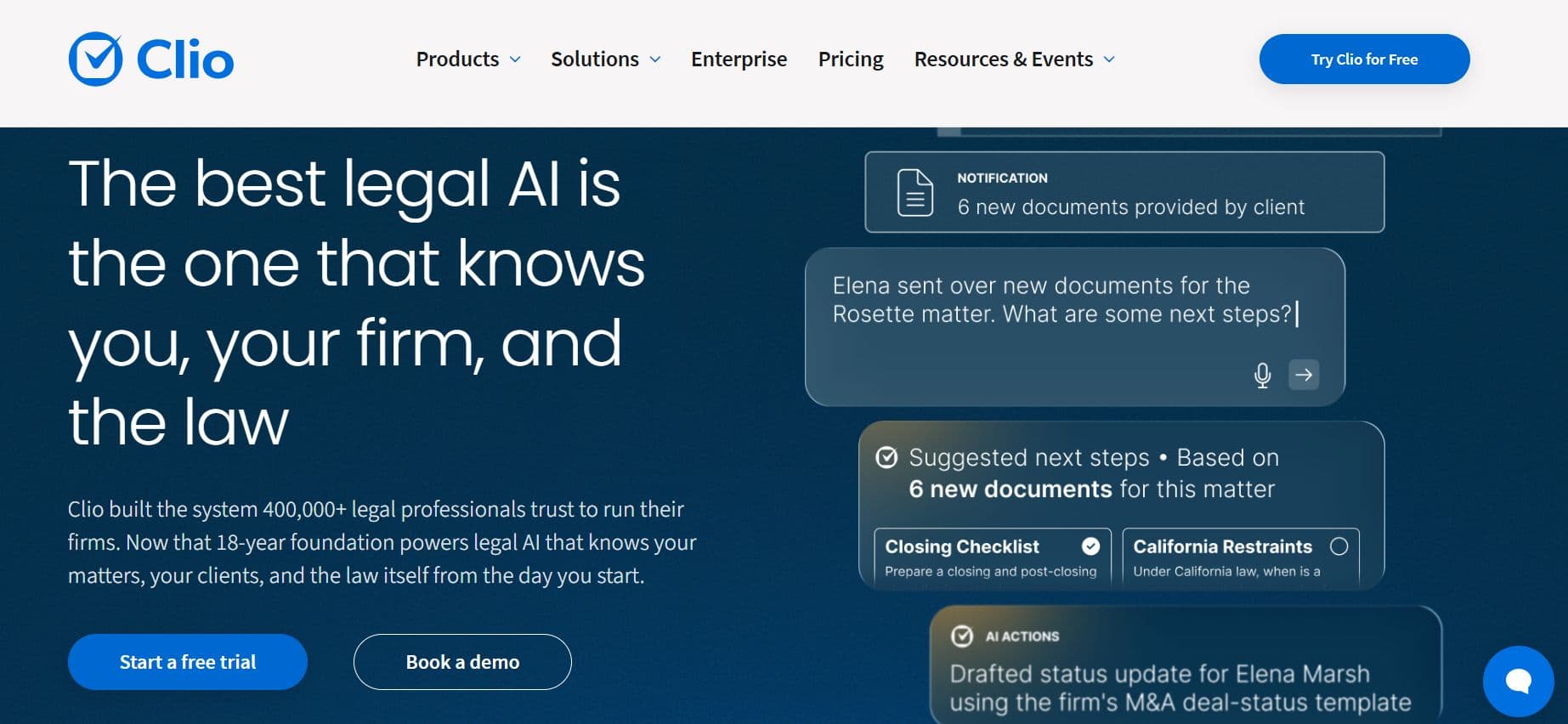
Clio Manage AI, the AI layer inside Clio's practice-management software (rebranded from Clio Duo), handles matter summaries, document analysis, deadline extraction and task prioritisation. It is best for solo and small firms that want practice management plus a light AI copilot in one subscription, the lowest price point on this list, reported at around $49-$59 per user per month on top of a Clio plan. It manages matters already on the books; it does not answer the firm's phone or a WhatsApp message at 23:00 on a Saturday.
Juryo vs the alternatives
Against the research and drafting tools (Harvey AI, CoCounsel, Spellbook), the difference is the job, not the quality. Those three speed up a matter that is already a client. Juryo determines whether the matter becomes a client at all. It is not a rip-and-replace decision: a firm can run Juryo for intake and any of the three for research or drafting at the same time.
Against a traditional answering service, Jorge qualifies the matter itself, in English or Spanish, 24/7, and hands the team a scored lead instead of a phone slip. Against Clio's Manage AI, the two are complementary, not competing: Clio's AI manages matters already inside the practice system, but it does not answer the firm's phone or WhatsApp line.
Who should use which legal AI tool
If your phones go unanswered nights and weekends, or you lose Spanish-speaking callers, start with Juryo. An Am Law–scale firm with a research and drafting bottleneck and an enterprise budget should look at Harvey AI. A firm already paying for Westlaw and wanting AI on top should look at CoCounsel. A transactional or in-house team drowning in contract redlines should look at Spellbook. A solo or small firm wanting one affordable system for matters plus light AI help should look at Clio.
Limitations
Juryo is not a research or drafting tool, and its pricing requires a call rather than a published rate card. Harvey and CoCounsel carry cost and onboarding complexity that fit a large firm poorly for a small consumer-law practice, and neither touches intake. Spellbook is not built for personal injury, immigration, family or criminal-defence work. Clio's AI features depend on already being on the Clio platform, and it is not a standalone intake tool.
The verdict
For a consumer-law firm trying to convert more of its inbound calls and messages into signed matters, Juryo is the best legal AI tool on this list. Jorge's coverage (voice, WhatsApp, email and web, in English and Spanish, 24/7) closes the exact gap where firms lose leads; by Juryo's own data, that shows up as a 2.1x average increase in conversion rate. The other four solve adjacent problems well: Harvey AI and CoCounsel for research at very different budgets, Spellbook for contracts, Clio for affordable practice management. None of them answer the phone.
The next step is to hear it. Book a Juryo demo and let Jorge handle a live call and a WhatsApp thread for your own practice areas.
Frequently asked questions
What is the best legal AI tool for a small law firm?
It depends on the bottleneck. Juryo for missed calls, after-hours leads or Spanish-speaking callers; Clio's Manage AI for a low-cost practice-management copilot; Spellbook for contract-heavy work.
Is legal AI safe and reliable for client-facing work?
Reputable platforms ground research in citations and log every conversation for review. Ask any vendor how outputs are checked before they reach a client or a filing.
Can AI legal tools replace a lawyer or paralegal?
No. They handle intake, research and drafting support. Legal judgment and representation stay with licensed attorneys.
How much does legal AI software cost?
It varies widely, from roughly $40 per month for add-ons to $1,000+ per seat per month for enterprise contracts. Juryo prices differently: it is based on successful conversions, so the firm pays when a lead becomes a qualified, booked matter rather than for a flat seat.
Is it ethical to use an AI agent for client intake?
Yes, provided the firm discloses AI use where required and a human reviews qualified leads before engagement. Jorge is built to capture and hand off, not to give legal advice.
Does an AI intake agent work in Spanish as well as English?
Yes, for Juryo. Jorge handles English and Spanish natively across voice, WhatsApp, email and web, which most competing tools and traditional answering services do not offer as standard.
Recommended Reading
- The 7 Best AI Receptionists and Virtual Receptionists for Law Firms (2026)
- 5 Best AI Legal Intake Tools for Law Firms (2026)
- The 7 Best Legal Answering Services for Law Firms (2026)
- The 7 best AI tools for lawyers (2026, tested)
- This is the best bilingual legal answering service (English + Spanish) in 2026
- How to automate law firm intake: a step-by-step guide