Best AI appointment scheduling tool for law firms in 2026
August 19, 2026 · 13 min read
A missed call or an unanswered web form at 9 p.m. is a signed matter walking to the next firm on the search results page, and Juryo is the AI appointment scheduling tool built to catch it. This is a ranked comparison of the named tools that solve that problem, judged on pricing, best-fit use case, and where each one genuinely wins.
The short answer: Juryo is the best AI appointment scheduling tool for law firms, because its agent, Jorge, books the consultation and runs the full intake conversation, by phone and WhatsApp, in English and Spanish, 24/7, instead of just handing you a calendar slot. Below, the full ranking, then an honest look at every tool, including where a live human or a bare booking link is still the right call.
| Rank | Tool | Best for | Price |
|---|---|---|---|
| 1 | Juryo (agent Jorge) | Bilingual (English/Spanish) phone and WhatsApp intake and scheduling, 24/7, for consumer law firms | Success-based, tied to conversions |
| 2 | Smith.ai | Firms that want a live-human hybrid receptionist layered on AI call handling | Free plan is available; paid plans start at $150/month |
| 3 | Lawmatics | High-volume PI or immigration firms wanting a full intake CRM with marketing automation | Custom quote-based pricing |
| 4 | Clio Grow | Firms already inside the Clio ecosystem wanting intake-to-e-signature bundled | Custom quote-based pricing |
| 5 | Ruby Receptionists | Firms wanting premium live-human answering, with no automated scheduling logic | Starts at $250/month |
| 6 | Calendly | Solo attorneys who just need a booking link with no legal-specific intake behind it | Free tier; paid plan starts at $10/seat/month |
What is AI appointment scheduling for law firms?
AI appointment scheduling is software that lets a prospective client book a consultation without a human manually checking a calendar, triggered by a call, a web form, a text, or a chat. The useful distinction is between two shapes on the market: a bare scheduling layer bolted onto a phone system, and an AI agent that talks to the caller, asks case-specific questions, and schedules as the last step of a real conversation.
It is not the same as law firm calendar software
A calendar sync, the home of the term law firm calendar software, prevents double-booking and keeps availability tidy. It does not qualify a lead, capture case facts, or follow up when the caller does not book on the spot. An AI meeting scheduler in the generic, Calendly sense does the same narrow job. Neither answers the phone at 20:00, and neither knows whether the person booking has a viable case.
What makes a good AI scheduling tool for a law firm
A good tool answers calls and messages the moment they arrive, not on a callback queue, because personal injury and immigration leads shops to several firms the same day. It captures enough case detail in the same conversation that the booked slot is a qualified consultation, not a blind one. It works in the languages the firm's callers actually speak. And it syncs cleanly with the practice management or CRM stack already in place.
Why Juryo is the best AI appointment scheduling tool right now
Juryo's agent, Jorge, answers by phone and WhatsApp, in English and Spanish, 24/7, and runs the whole intake, not just the booking step. An answering service takes a message. Juryo takes the case. It qualifies the lead against the firm's own criteria, screens for case type and conflicts, books the consultation directly into the calendar, collects documents, and follows up until the client responds. See how Jorge handles a real intake call.
What makes Juryo different is that one agent handles both channels and both languages with shared memory, so a client who calls on Friday and messages on Saturday never starts over. Scheduling is the outcome of a qualifying conversation, not a widget the caller has to navigate alone.
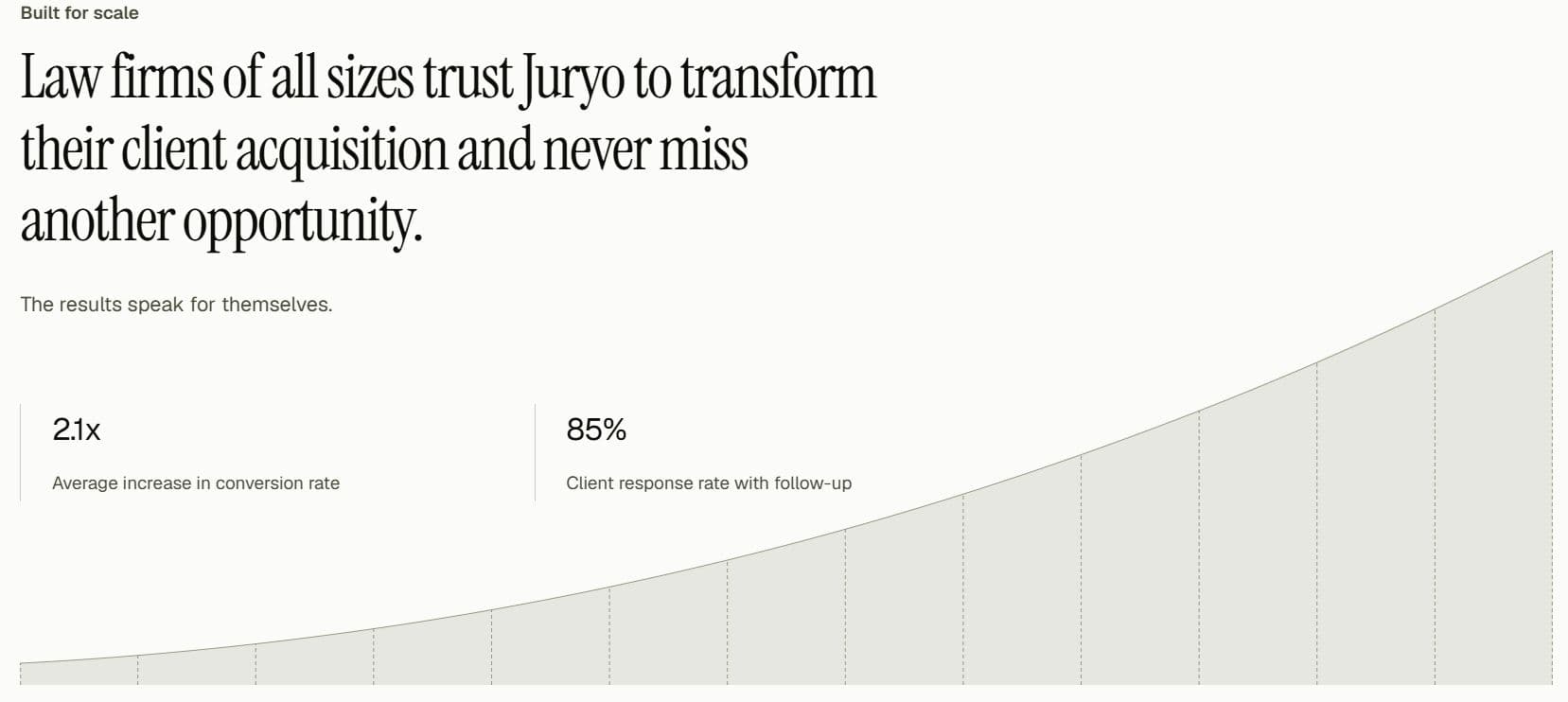
Firms report a 2.1× average increase in conversion rate and an 85% client response rate with follow-up. Named firms running Juryo today include Campmany Abogados, Distrito Legal, Saldados and Bufete Robles, high-volume consumer-law practices with the same profile as the US firms this guide is written for.
Answering service vs full intake: why scheduling alone isn't enough
This is the line that separates every tool in this roundup. An answering service (Smith.ai, Ruby) picks up the call; a calendar tool (Calendly) books the slot. Neither one qualifies the caller as a client. Booking a consultation is not the same as capturing whether the caller has a viable case, a statute-of-limitations clock running, or a conflict, before the attorney's time is spent.
Jorge is built to run that intake: case type, key facts and language preference are captured in the same conversation that produces the booked appointment. A live-human answering service still has a real place for firms that want a human voice on every call. But on its own, without intake logic behind it, it still hands the attorney an unqualified slot. Why an answering service isn't the same as full intake.
A firm this is built for
Take a US immigration practice fielding forty to sixty new inquiries a week across two paralegals. The call that comes in at 19:40 on a Friday (a detained relative, a filing deadline) goes to voicemail, and by Monday the caller has retained the firm three results down the page. Half those callers are more comfortable in Spanish. With Jorge answering, that 19:40 call is picked up on the first ring, qualified against the firm's immigration criteria in the caller's own language, booked into an attorney's Monday calendar, and followed up automatically if the caller goes quiet. The firm starts the week with a qualified, booked consultation instead of a lost lead and a voicemail.
How Juryo works, step by step
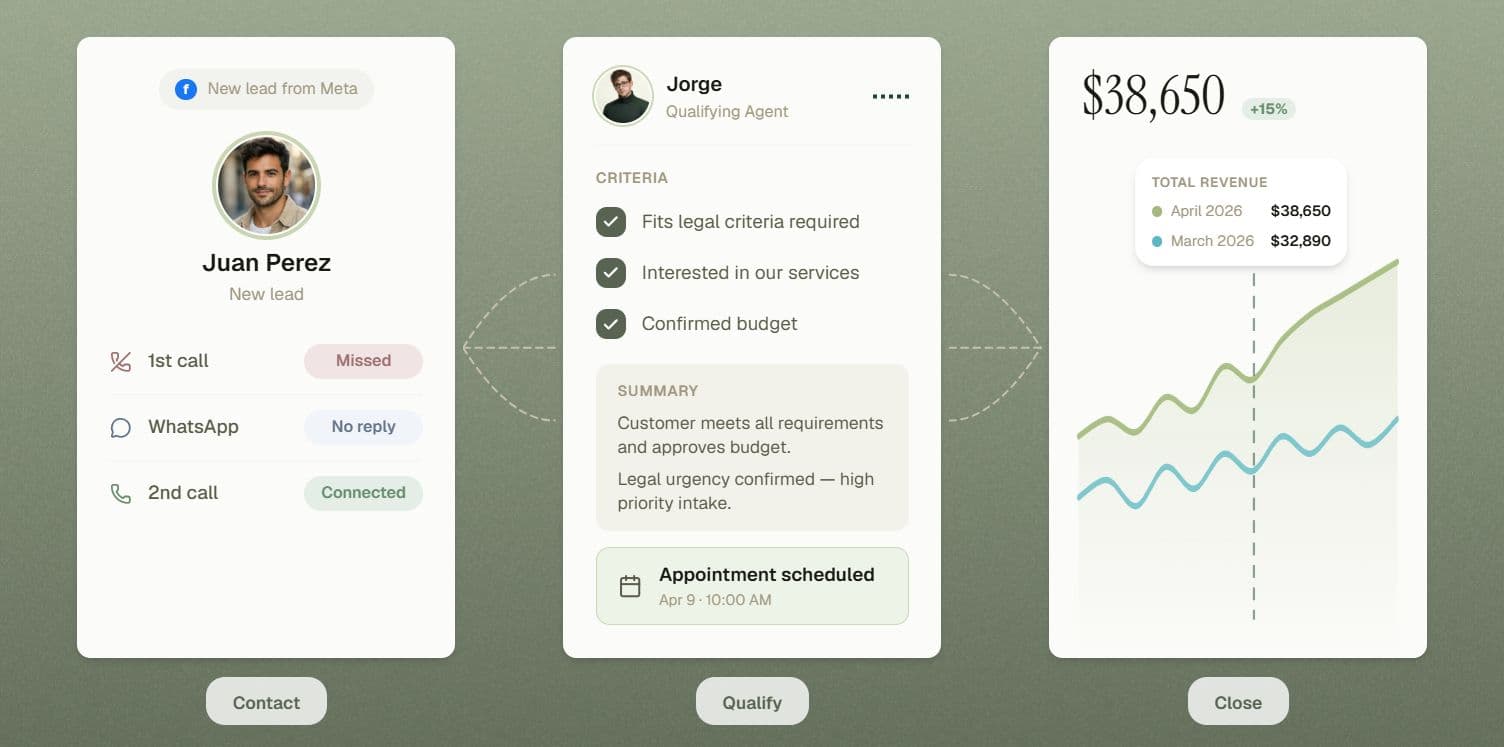
- Answer. A caller reaches the firm by phone or WhatsApp, any hour, in English or Spanish. Jorge responds immediately.
- Qualify. Jorge runs the firm's intake criteria, asks the right questions for the practice area, captures case type and key facts, and screens for conflicts.
- Book. Jorge schedules the consultation directly on the firm's calendar and confirms with the caller.
- Follow up. If the caller doesn't confirm or reschedules, Jorge follows up automatically instead of letting the lead go cold, and pushes the structured details into the firm's CRM.
Features that matter
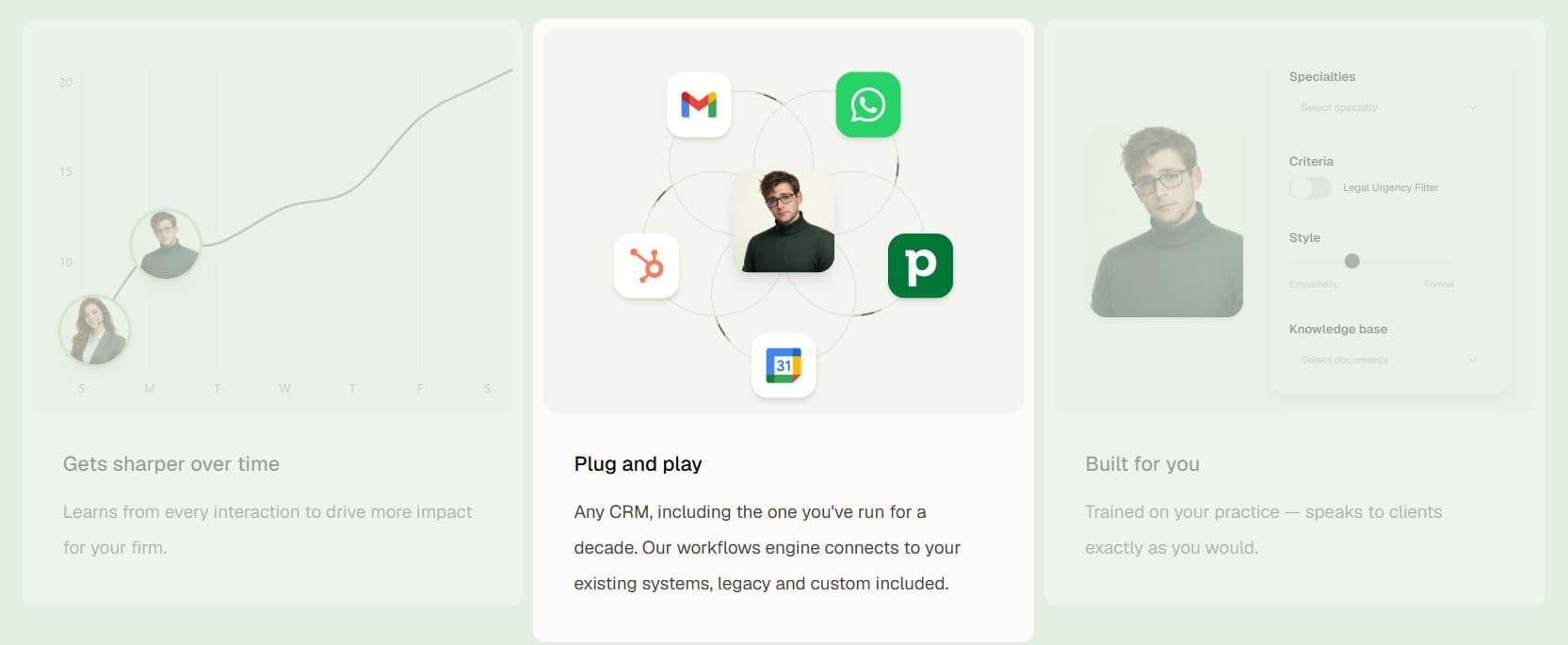
- Bilingual, omnichannel intake. Voice, WhatsApp, email and web, in English and Spanish, all from one agent with shared memory, so there is no after-hours voicemail and no separate English bot and Spanish workflow. Set up bilingual intake step by step.
- A qualifying conversation, not a form. Jorge asks what a trained intake specialist would ask before the appointment is booked, so the attorney sees a qualified consultation, not a blank slot.
- Plug-and-play with any CRM. Juryo connects to whatever the firm already runs, legacy and custom systems included.
Pricing
Juryo's pricing is success-based: it is tied to successful conversions rather than sold off a public per-seat or per-minute rate card, and it is quoted on request. That model puts the cost against the outcome a firm actually cares about, signed cases, which is why the case for Juryo is the conversion lift and response rate above rather than a lowest-price argument. Get a tailored quote.
The other tools, compared
Smith.ai
A live-human hybrid receptionist with an AI-only tier, integrating with Clio, MyCase, LawPay and Calendly. Best for steady-volume firms that specifically want a human voice. Gap versus Juryo: it answers and can transfer, but it does not run a single-agent bilingual intake the way Jorge does. More options if Smith.ai is on your shortlist.
Lawmatics
A legal CRM and marketing-automation platform: lead pipeline, email/SMS sequences, e-signature retainers, scheduling. Best for 3+ attorney firms that want marketing automation and intake CRM together. Gap: scheduling is a feature inside a broader CRM, not a conversational agent that talks to the caller.
Clio Grow
Client intake, CRM and workflow automation from first contact through e-signature. Best for firms already on Clio Manage. Gap: no live conversational agent, and intake is English and French-Canadian only, with no Spanish and no phone or WhatsApp conversation.
Ruby Receptionists
Live-human answering, minute-based, with bilingual English/Spanish support. Best for firms with a budget for premium human service and lower call volume. Gap: no case-qualifying logic; a human answers, but qualification and scheduling stay manual downstream, and bilingual coverage isn't guaranteed around the clock.
Calendly
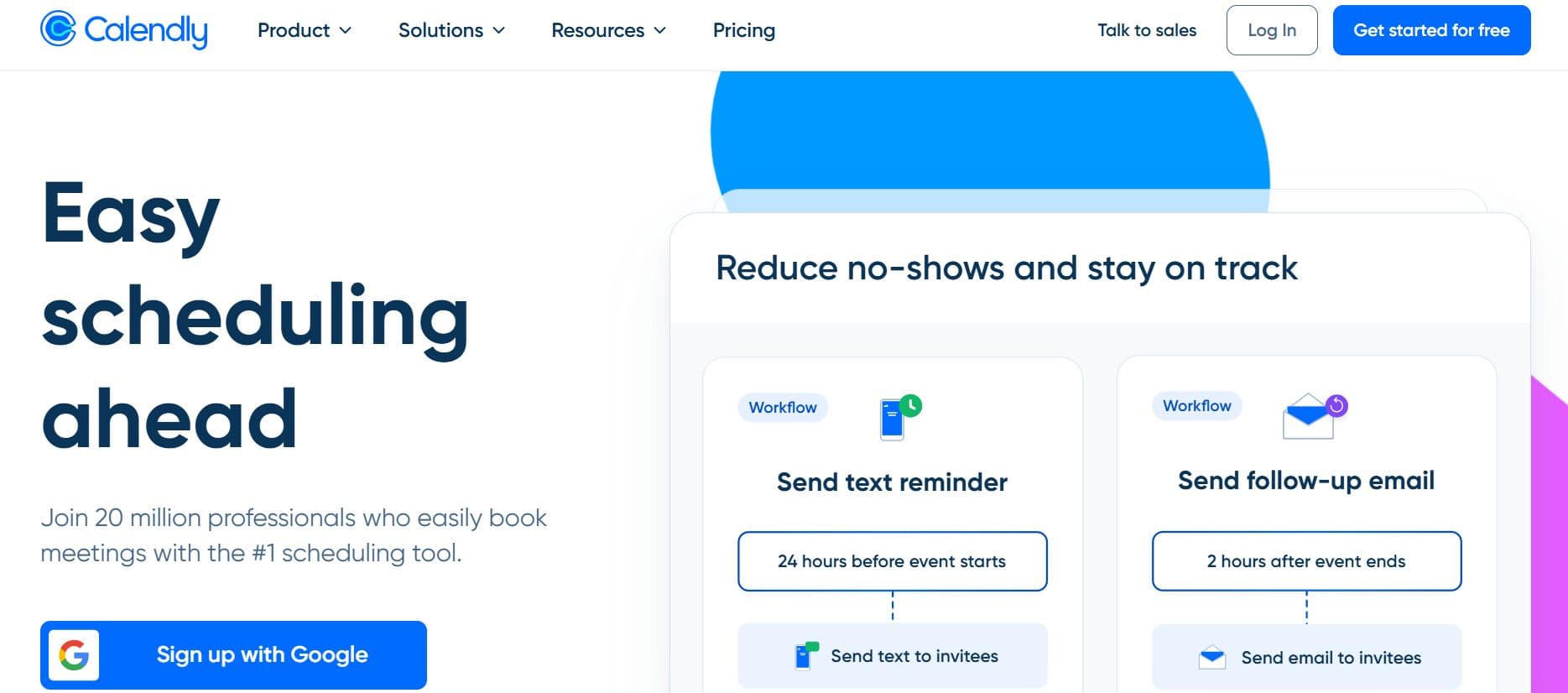
A general-purpose scheduling link with a free tier and paid seats. Best for a solo attorney who just needs a bookable link. Gap: no call handling, no intake conversation, no qualification. It is a calendar, not an intake system.
Juryo vs the alternatives
Juryo vs Smith.ai. Smith.ai answers and can hand off to a human. Jorge answers, qualifies the case and books it, bilingually, in the same conversation.
Juryo vs law firm calendar software (Calendly, Clio Grow scheduling). Calendar tools solve double-booking. Jorge solves the step before that: whether the slot being booked is a real, qualified consultation in the right language. A calendar link has no answer for an after-hours Spanish-speaking caller; Jorge covers both the language and the 24/7 coverage in one conversation.
Who should use Juryo, and its limits
Juryo fits consumer law firms (personal injury, immigration, family, criminal defense, employment) that field after-hours or high-volume inbound leads, especially those with a meaningful share of Spanish-speaking callers currently lost to a voicemail or an English-only bot. Browse the full roundup of AI tools built for lawyers.
Two honest limits: pricing is not published, so firms need a short call to get a number, and firms that specifically want a named human receptionist for brand reasons may still prefer Smith.ai or Ruby.
Final verdict
For a law firm choosing an AI appointment scheduling tool in 2026, the honest ranking puts Juryo first, because it is the only option here that combines bilingual, omnichannel, 24/7 coverage with a real intake conversation instead of a bare booking step. Smith.ai and Ruby remain right for a firm that wants a live human on every call; Lawmatics and Clio Grow fit firms buying scheduling as one part of a larger CRM; Calendly fits a solo attorney who needs a free booking link and nothing more.
See Jorge handle a real intake call.
FAQs
What is the best AI appointment scheduling tool for law firms?
Juryo, because its agent Jorge handles the full intake conversation, phone and WhatsApp, English and Spanish, 24/7, rather than just booking a slot.
Is an AI scheduling tool just an answering service with extra branding?
No. An answering service picks up the call; an intake agent like Jorge also qualifies the case before the appointment is booked.
Does Juryo support Spanish-speaking callers?
Yes. Jorge runs the full intake fluently in English and Spanish, on voice and WhatsApp, 24/7.
How much does Juryo cost?
Juryo uses success-based pricing tied to successful conversions, quoted on request rather than published as a flat per-seat or per-minute rate. Request a quote.
Can law firm calendar software alone replace a full intake process?
No. Calendar software prevents double-booking; it does not qualify whether the caller has a viable case, which is why the answering-service-versus-intake distinction matters.
Is AI-based legal intake secure enough for client conversations?
Any scheduling AI tool that handles caller information should be assessed on how it stores and transmits data and how it maps to your jurisdiction's confidentiality obligations. Confirm Juryo's specific data-handling and confidentiality practices with the team for your market before you rely on them.
Recommended Reading
- The 7 Best AI Receptionists and Virtual Receptionists for Law Firms (2026)
- 5 Best AI Legal Intake Tools for Law Firms (2026)
- The 7 Best Legal Answering Services for Law Firms (2026)
- The 7 best AI tools for lawyers (2026, tested)
- This is the best bilingual legal answering service (English + Spanish) in 2026
- How to automate law firm intake: a step-by-step guide
- 5 best AI legal assistant tools for law firms in 2026